


Many retirees assume selling a winning investment automatically creates a federal tax bill. In 2026, some retirees can legally sell appreciated investments and pay a 0% federal long term capital gains tax rate.
The catch is that the rule depends on taxable income, not just the size of the gain. Social Security, IRA withdrawals, dividends, Medicare, and deductions can all change the final result.
This article explains who may qualify and how the calculation really works. It also covers the hidden costs that can make a 0% gain less attractive than it first appears.
Yes, Retirees Really Can Pay 0% Federal Capital Gains Tax
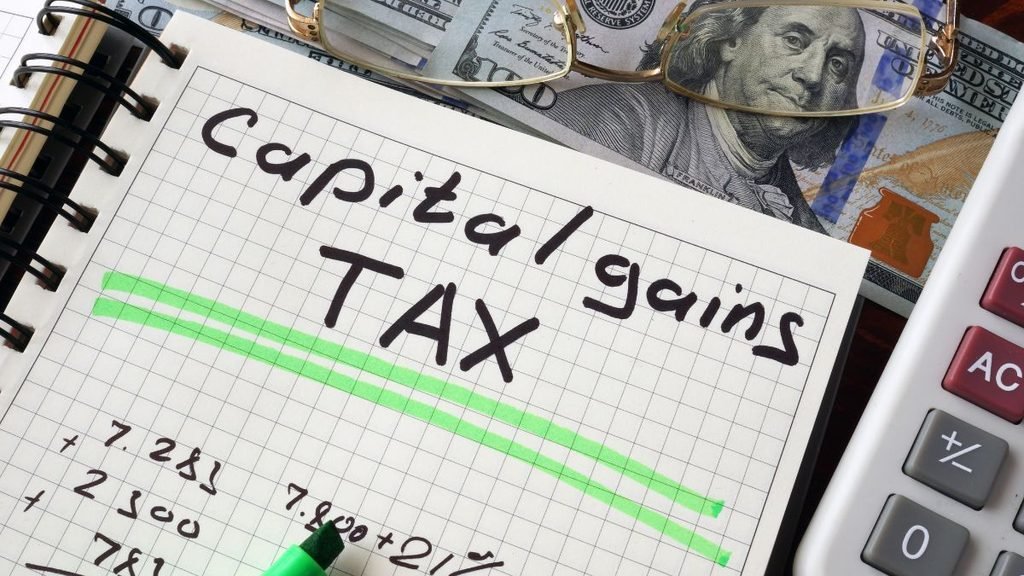
The 0% capital gains rate is not a loophole. It is part of the federal tax code and applies to qualifying long term capital gains when taxable income remains within certain limits.
For tax year 2026, the 0% long term capital gains ceiling is $49,450 for single filers. It is $98,900 for married couples filing jointly and $66,200 for heads of household.
The key phrase is taxable income. That is very different from gross income, investment proceeds, or the total amount someone withdraws from a brokerage account.
A retiree could sell $100,000 of stock and have far less than $100,000 of taxable gain. Only the difference between the sale proceeds and adjusted cost basis generally creates the capital gain.
The Most Important 2026 Numbers
Several tax figures can affect whether a retiree stays inside the 0% bracket. Using an outdated 2025 number can produce the wrong result.
The following table shows the major 2026 figures that matter most when estimating the opportunity.
| 2026 Tax Item | Single | Married Filing Jointly | Why It Matters |
|---|---|---|---|
| 0% long term gain ceiling | $49,450 | $98,900 | Top of 0% bracket |
| Standard deduction | $16,100 | $32,200 | Reduces taxable income |
| Age 65+ additional deduction | $2,050* | $1,650 per eligible spouse | Creates more deduction |
| Enhanced senior deduction | Up to $6,000 | Up to $12,000 | May reduce taxable income further |
| NIIT threshold | $200,000 MAGI | $250,000 MAGI | Higher income investment surtax |
*For an unmarried qualifying taxpayer age 65 or older.
The temporary enhanced senior deduction is separate from the normal age based deduction. Eligible taxpayers age 65 or older can receive up to $6,000 each for tax years 2025 through 2028.
That deduction begins phasing out above certain income levels. Because capital gains can increase modified adjusted gross income, harvesting too much can reduce part of the deduction.
The Rule Many Retirees Miss

The 0% threshold is not a separate bucket reserved only for capital gains. Ordinary taxable income generally fills the lower part of the income stack first.
Long term gains and qualified dividends then sit on top when the preferential capital gains rate is calculated. This is why pension income or IRA withdrawals can reduce the amount of gain taxed at 0%.
Consider a hypothetical married couple who are both age 67. Assume they receive $65,000 of pension, interest, and other ordinary income and realize a $75,000 long term capital gain.
Their total income would be about $140,000 before deductions. Assume they qualify for the $32,200 standard deduction, $3,300 in age based deductions, and the full $12,000 enhanced senior deduction.
Those deductions total about $47,500. Taxable income would therefore fall to roughly $92,500 under these simplified assumptions.
Because $92,500 remains below the 2026 married filing jointly 0% capital gains ceiling of $98,900, the entire qualifying long term gain could fall in the 0% federal bracket.
That does not mean the couple owes no federal income tax at all. Ordinary taxable income may still be taxed at normal federal income tax rates.
The distinction matters because the headline is about the tax rate on the long term capital gain. It is not a promise that the household’s entire federal tax bill becomes zero.
Retirement Can Create a Rare Tax Window

Working years often leave little room for 0% gain harvesting because salary already fills much of the lower tax brackets. Retirement can temporarily change that picture.
Income may drop after the final paycheck but before Social Security, large pension income, or required minimum distributions begin. That period can create unusually valuable tax planning opportunities.
For many households, the strongest window appears during the first few years after leaving work. Fidelity and Schwab both discuss these lower income retirement years as potential opportunities for tax gain harvesting and Roth conversions.
| Retirement Stage | 0% Gain Opportunity | Main Issue |
|---|---|---|
| Still working | Often limited | Wages fill tax brackets |
| Newly retired | Often strong | Severance or pension income |
| Before Social Security | Potentially strong | Healthcare subsidy planning |
| After Social Security | Still possible | Benefits may become taxable |
| RMD years | Often smaller | Mandatory distributions |
| Surviving spouse years | Can shrink | Single filing thresholds |
This creates an important planning lesson. A low income retirement year is a limited tax resource, and several strategies may compete for the same space.
A retiree might use that room to harvest capital gains. Another household may decide a Roth conversion is more valuable over the long run.
Tax Gain Harvesting Is How Some Retirees Use the 0% Rate
Tax gain harvesting means intentionally selling an appreciated investment during a year when the gain can receive a low or 0% federal rate. The investor realizes the gain instead of continuing to defer it.
Suppose stock purchased for $20,000 is now worth $50,000. Selling the position creates a $30,000 capital gain before considering any other adjustments.
If the full $30,000 fits within the retiree’s available 0% bracket, federal long term capital gains tax on that gain may be zero. The money can then be spent, reallocated, or potentially reinvested.
A retiree may also repurchase an investment and establish a new, higher cost basis. That can reduce the amount of taxable appreciation attached to the new shares in future years.
The wash sale rule that investors often fear is primarily a loss rule. It generally prevents certain losses from being immediately deducted when substantially identical securities are repurchased within the required period.
It does not generally cancel a taxable gain merely because the investor repurchases the security. Investment goals, tax lots, and future holding periods still need to be considered.
Social Security Can Change the Answer

Social Security is one of the biggest reasons a 0% gain can create an unexpected tax effect. Capital gains increase adjusted gross income, which can affect how much Social Security becomes taxable.
For married couples filing jointly, longstanding combined income thresholds begin at $32,000 and $44,000. For many individual filers, the corresponding thresholds are $25,000 and $34,000.
Once combined income rises enough, up to 85% of Social Security benefits can be included in taxable income. That does not mean Social Security itself is taxed at an 85% rate.
It means up to 85% of benefits can become part of taxable income. The actual tax rate depends on the household’s tax situation.
This creates a strange outcome for retirees. A capital gain may technically receive a 0% capital gains rate while causing additional Social Security benefits to become taxable.
That newly taxable Social Security then uses part of the household’s taxable income capacity. The available 0% capital gain space can become smaller than expected.
The following checklist shows when gain harvesting deserves closer analysis.
| Area | Strong Position | Warning Sign |
|---|---|---|
| Holding period | More than one year | One year or less |
| Ordinary income | Low and predictable | Large IRA withdrawals |
| Social Security | Tax effect already modeled | Near taxation thresholds |
| Qualified dividends | Included in calculation | Large year end dividends |
| Medicare | Plenty of MAGI room | Near IRMAA level |
| State taxes | State rule reviewed | Assuming federal 0% means state 0% |
This is why estimating the entire tax return matters. Looking only at the brokerage statement can create a misleading sense of how much gain is available at 0%.
Retirees Over 65 Have Extra Deductions in 2026

Older taxpayers can have more deduction room than younger taxpayers with the same gross income. That can increase the amount of qualifying gain that fits inside the 0% bracket.
For 2026, the regular standard deduction is $16,100 for single filers and $32,200 for married couples filing jointly. Eligible taxpayers age 65 or older can also receive an additional standard deduction.
There is also a temporary enhanced senior deduction of up to $6,000 per eligible person. A married couple where both spouses qualify could potentially receive up to $12,000.
The enhanced deduction starts phasing out when MAGI exceeds $75,000 for an individual or $150,000 for married couples filing jointly. That creates another reason to avoid looking at capital gains in isolation.
A larger realized gain can increase MAGI. In some cases, part of the additional gain can therefore reduce the senior deduction at the same time.
Medicare May Care Even If the Capital Gain Rate Is 0%

Medicare IRMAA is another place where the headline can become misleading. Medicare generally looks at modified adjusted gross income, not the tax rate that applied to a specific gain.
For 2026 Medicare premiums, the first IRMAA threshold begins above $109,000 for individuals and $218,000 for married couples filing jointly. The standard 2026 Part B premium is $202.90 per month.
Higher income beneficiaries can pay additional amounts for both Part B and Part D. A large investment gain can therefore matter even when its federal capital gains rate is 0%.
Medicare generally uses tax information from two years earlier when determining IRMAA. That means 2026 income would normally become relevant to 2028 Medicare premiums.
The exact 2028 IRMAA thresholds are not yet known in September 2026. Retirees should therefore avoid assuming today’s 2026 thresholds will remain unchanged.
A large gain could save capital gains tax today but contribute to higher Medicare costs later. The better calculation compares both sides of the trade.
Retiring Before Medicare Creates Another Problem

Retirees younger than 65 may get health insurance through the Affordable Care Act Marketplace. Capital gains can affect that calculation too.
HealthCare.gov counts capital gains as part of household income used for Marketplace savings. A gain taxed federally at 0% can therefore still increase health insurance costs.
Consider a 62 year old retiree who deliberately keeps taxable income low to qualify for strong Marketplace assistance. Harvesting another $30,000 of gain could reduce that assistance.
The transaction may still make sense. But the healthcare cost needs to be compared with the tax savings before the investment is sold.
Roth Conversions May Compete With 0% Capital Gains
Low income retirement years often present another opportunity: Roth conversions. A retiree can convert money from a traditional retirement account into a Roth account and pay ordinary income tax today.
That conversion increases taxable income. It can therefore use space that otherwise might have allowed more long term gains to remain in the 0% bracket.
The reverse also applies. Harvesting a large capital gain may leave less room for a Roth conversion at attractive ordinary income tax rates.
Retirees should compare these choices instead of assuming the 0% capital gains bracket must always be filled.
| Strategy | Potential Benefit | Potential Cost | Often Best When |
|---|---|---|---|
| Harvest gains | Raises basis at low tax cost | Raises AGI and MAGI | Taxable portfolio has large gains |
| Roth conversion | Reduces future pretax balance | Creates ordinary income now | Future RMDs may be large |
| Harvest losses | Offsets gains | Changes portfolio position | Investments have losses |
| Delay selling | Keeps tax deferred | Embedded gain remains | Future taxes may be lower |
| Spend taxable basis | Funds retirement | Reduces taxable portfolio | Brokerage account funds spending |
A household expecting large future RMDs may prefer to use some tax space for Roth conversions. Another retiree with concentrated stock may prioritize gain harvesting and diversification.
There is no universal winner. The better move depends on future income, portfolio risk, estate goals, and expected tax rates.
Five Situations Where the 0% Headline Does Not Work
The first problem is holding period. Investments held for one year or less generally produce short term gains, which are taxed using ordinary income tax rates rather than the long term preferential rates.
The second problem involves special assets. Collectibles can face a maximum federal rate of 28%, while certain unrecaptured Section 1250 real estate gains can face a maximum rate of 25%.
Third, qualified dividends share the preferential capital gains calculation. Retirees receiving substantial qualified dividends may have less unused 0% room than expected.
Fourth, state taxes are separate. A retiree can owe no federal capital gains tax but still owe state tax on the same investment gain.
Fifth, money from a traditional IRA is different from a taxable brokerage gain. Traditional IRA withdrawals are generally taxed as ordinary income rather than under the long term capital gains brackets.
There is also the 3.8% Net Investment Income Tax for higher income households. It can apply when MAGI exceeds $200,000 for single filers or $250,000 for married couples filing jointly.
Those thresholds are normally far above the 0% capital gains range. Still, large one time transactions or other income can make the tax relevant.
Selling a Home Uses a Different Tax Rule

Some retirees can also sell a highly appreciated home without paying federal capital gains tax on much of the gain. That strategy uses a separate exclusion rather than the 0% investment capital gains bracket.
A qualifying homeowner can potentially exclude up to $250,000 of gain from the sale of a principal residence. Many married couples filing jointly may qualify for an exclusion of up to $500,000.
The homeowner generally must meet ownership and use requirements. These usually include owning and living in the property as a main home for at least two of the five years before the sale.
The exclusion applies to the gain, not the selling price. A $600,000 home sale does not automatically create a $600,000 capital gain.
Purchase cost, improvements, selling expenses, depreciation, and other basis adjustments can all change the number. Retirees considering a major home sale should calculate basis before assuming the gain is fully excluded.
Sometimes Leaving the Gain Alone Is Better
Paying 0% today sounds better than paying tax later. Estate rules can make the decision less obvious.
Inherited property generally receives a basis related to its fair market value at the owner’s death, subject to important exceptions. This can reduce or eliminate much of the unrealized gain for heirs.
A retiree planning to spend or rebalance the investment may have a strong reason to harvest gains today. Someone primarily holding assets for heirs may reach a different conclusion.
Taxes are also not the only concern. A highly appreciated stock position can create concentration risk if too much retirement wealth depends on one company.
Selling simply because the tax rate is 0% is not automatically wise either. The investment decision should still fit the retiree’s spending needs, risk tolerance, and portfolio plan.
A Five Step 0% Capital Gains Check
The best time to estimate the strategy is often when the household has a fairly good picture of its full year income. Pension payments, Social Security, dividends, withdrawals, and deductions should all be included.
A year end projection can then estimate how much 0% space remains. The following checklist can help organize the calculation.
| Priority | What to Review | Practical Next Step |
|---|---|---|
| 1 | Tax lots | Find shares with long term gains |
| 2 | Total income | Add pensions, IRA withdrawals and Social Security |
| 3 | Deductions | Estimate 2026 deductions |
| 4 | Side effects | Check Medicare, ACA, Social Security and state tax |
| 5 | Remaining 0% room | Decide how much gain to realize |
Tax lot selection can make a large difference. Investors who bought shares at several prices may be able to choose which specific shares to sell if proper identification rules are followed.
Selling higher basis shares generally creates a smaller gain. Selling lower basis shares generally creates a larger gain and uses more of the available 0% bracket.
That flexibility can help a retiree target a specific gain amount. It can also make portfolio rebalancing more tax efficient.