


Retirement health is often discussed as if people are either “healthy” or “need care.” Real life is messier: CDC says more than 90% of Americans 65 and older have at least one chronic condition, yet having a diagnosis does not automatically mean losing independence.
The better question is what your health is doing to daily life. Can you still manage medications, meals, money, transportation, bathing, dressing, household tasks, and getting around without routine help?
That is where these 6 retirement health tiers become useful. They are not an official medical scale or a diagnosis, but a planning framework for matching support, housing, and money to what you can actually do today.
What the 6 Retirement Health Tiers Actually Measure

Age is intentionally missing from this framework. Two people of the same age can have completely different levels of stamina, mobility, cognition, medical complexity, home support, and independence.
The framework instead looks at function, health-management burden, safety, cognition, and the amount of help regularly required. Those are often more useful for retirement planning than counting birthdays or diagnoses.
The Six Retirement Health Tiers at a Glance
| Health tier | What daily life generally looks like | Main planning priority |
|---|---|---|
| Tier 1: Independent with strong reserve | Daily life is self-managed and demanding days are still manageable | Preserve function and keep prevention current |
| Tier 2: Independent with heavier health management | Conditions, appointments or medications require attention, but daily activities remain independent | Simplify medical management and prevent small problems from piling up |
| Tier 3: Early functional strain | Stairs, shopping, long drives, heavy chores or recovery after activity are becoming harder | Remove friction before it becomes dependence |
| Tier 4: Regular help with instrumental tasks | Weekly help is needed for transportation, shopping, meals, cleaning, finances or medication organization | Build reliable support and price it realistically |
| Tier 5: Hands-on personal-care support | Help with bathing, dressing, toileting, eating, transferring or similar activities is routinely needed | Match care hours and housing to personal-care needs |
| Tier 6: Continuous or complex support | Leaving the person alone may be unsafe, or medical/personal needs require frequent or 24-hour support | Create a sustainable care setting and financing plan |
The borders are intentionally soft. Someone recovering from surgery can temporarily require Tier 5-level assistance and later return to Tier 2 or 3 after rehabilitation.
The framework should therefore be used as a snapshot, not a permanent label. What matters most is whether support needs are becoming more frequent, more hands-on, or harder to safely manage.
Tier 1: Independent With Strong Functional Reserve

Tier 1 does not mean having a perfect medical record. It means health conditions are not placing meaningful limits on everyday independence.
A Tier 1 retiree can typically handle personal care, medication routines, shopping, transportation, meals, money, appointments, household decisions, and ordinary community activities without recurring assistance.
The planning mistake at this level is pretending nothing could change. Prevention, strength, balance, vision, hearing, medication review, home safety, and transportation planning are easier to address before they interfere with independence.
Medicare’s yearly Wellness visit can help here. Medicare Part B covers the visit once every 12 months for eligible beneficiaries, and the visit can include a health-risk assessment, medication review, cognitive assessment, prevention plan, and discussion of appropriate screenings and vaccines.
NIA also notes that physical activity can help maintain the physical function needed for everyday tasks and independent living. That does not mean exercise guarantees independence, but maintaining strength and movement can support function.
Tier 2: Independent, but Health Management Is Becoming a Job
Tier 2 often looks healthy from the outside. The difference is that staying independent now requires considerably more organization.
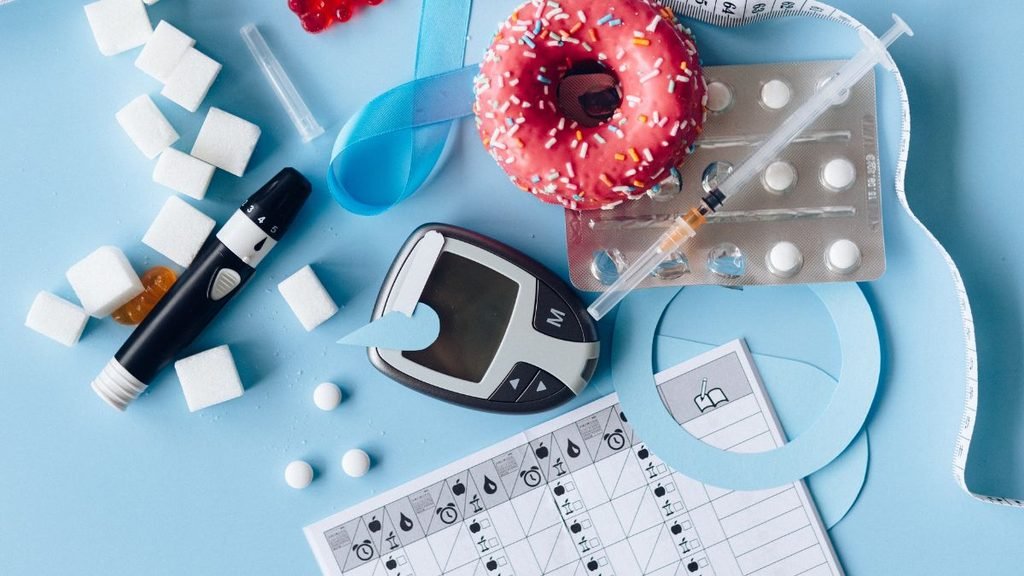
There may be several prescriptions, specialist appointments, home monitoring, dietary restrictions, therapy exercises, medical equipment, or recurring tests. Everything still gets done independently, but health occupies more calendar space and mental energy.
This tier matters because chronic conditions are extremely common. CDC currently reports that more than 90% of adults 65 and older have at least one chronic condition, so a diagnosis by itself tells us surprisingly little about a person’s level of independence.
The useful question is whether managing those conditions is beginning to break down. Repeatedly missing medication doses, postponing appointments because transportation is difficult, or becoming confused by several treatment instructions deserves attention even when bathing, dressing, and walking remain easy.
A simpler pill-management system, medication review, consolidated appointments, transportation backup, or help coordinating care may keep someone independent longer. Support at this stage can remove workload without taking control away from the person receiving it.
Tier 3: Early Functional Strain Starts Changing Your Choices

Tier 3 is where retirement health often changes quietly. Nothing necessarily looks serious enough to call “care,” yet daily choices begin shrinking around what the body can comfortably manage.
Maybe stairs determine which rooms get used. Grocery trips become shorter, night driving gets avoided, a bathtub feels less secure, heavy laundry becomes difficult, or a long outing now requires the next day for recovery.
Falls deserve particular attention here without turning every stumble into a crisis. CDC reported in September 2026 that more than one in four adults 65 and older falls each year, and falling once increases the chance of another fall.
The useful signal is not simply whether someone has fallen. Look at whether balance concerns, fear of falling, pain, weakness, vision problems, or reduced confidence are starting to change normal activity.
A Tier 3 response might be physical therapy when medically appropriate, a clinician review of contributing health issues, better lighting, a safer shower setup, railings, easier storage, grocery delivery, or transportation alternatives. The objective is to preserve choices rather than wait until inconvenience becomes dependence.
The Line That Often Matters More Than the Diagnosis List
Health professionals and aging researchers frequently look at instrumental activities of daily living, or IADLs, and activities of daily living, or ADLs. IADLs are the more complex tasks needed to run an independent life, while ADLs involve basic personal care.
Difficulty with IADLs can therefore appear before someone needs hands-on personal care. That distinction is one of the clearest ways to separate Tiers 3 and 4 from Tiers 5 and 6.
Everyday Tasks That Reveal Changing Support Needs
| Type of task | Examples | What difficulty can mean for planning |
|---|---|---|
| IADL | Shopping and meal preparation | Food access or transportation support may be needed |
| IADL | Managing medication | Simplification, reminders or assistance may be useful |
| IADL | Managing bills and finances | Systems, trusted assistance or professional support may be needed |
| IADL | Transportation | Driving alternatives may need to become part of the plan |
| IADL | Housekeeping and laundry | Paid or informal help can reduce physical strain |
| ADL | Bathing and grooming | Hands-on personal-care support may be required |
| ADL | Dressing | Regular personal assistance may be needed |
| ADL | Toileting | The care plan may require more frequent availability |
| ADL | Eating | Mealtime assistance may be necessary |
| ADL | Moving between bed, chair or other positions | Transfer assistance and a safety assessment may be needed |
A single difficult task does not automatically place someone in a particular tier. Arthritis may make one activity difficult while leaving the rest of life entirely independent.
What matters is the pattern. When several important tasks require recurring help, or when assistance has become necessary for safety rather than convenience, the support plan should change with it.
Tier 4: Regular Help Has Become Part of the Week
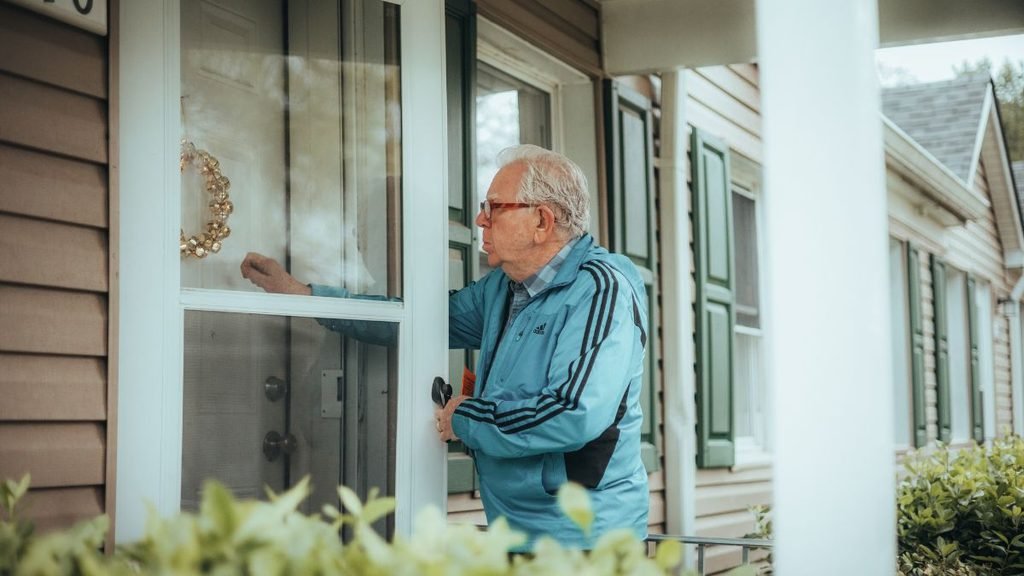
Tier 4 is usually still compatible with living independently, but independence is now being supported by other people or services. Someone might need grocery delivery, housekeeping, transportation, meal preparation, medication organization, help with errands, or several hours of nonmedical home care each week.
This is also where families can accidentally underestimate the amount of care being provided. A daughter who drives to appointments, a neighbor bringing groceries, and a spouse handling every household task can make a person look fully independent on paper even though a substantial support system is already operating.
There is nothing inherently wrong with that arrangement when everyone involved is comfortable with it. The problem appears when the arrangement depends entirely on one person who becomes sick, moves, returns to work, or simply cannot continue providing the same hours.
ACL’s Eldercare Locator can connect older adults and families with local resources including transportation, meals, home-care information, caregiver assistance, and Area Agencies on Aging. Local availability and eligibility vary, so checking what exists before a crisis can reveal options that were not obvious.
Tier 5: Hands-On Personal Care Is Routinely Needed

The move toward Tier 5 becomes clearer when assistance is needed with ADLs such as bathing, dressing, toileting, eating, grooming, or getting safely between a bed and chair. NIA describes these personal-care activities as central parts of home-based long-term care.
That does not automatically mean someone needs to leave home. Paid caregivers, family support, adult day services, home modifications, or a combination of services may allow home living to continue when that remains the person’s preference and the arrangement is workable.
Assisted living is another option for some people who need regular personal support but not continuous skilled nursing. Services and licensing vary by state and facility, so two communities using the same “assisted living” label may provide very different levels of care.
Medicare is especially important to understand here. Medicare can cover qualifying intermittent skilled home-health services, but it does not pay for 24-hour home care, homemaker services unrelated to a care plan, or custodial personal care when that is the only care needed.
Tier 6: Continuous Supervision or Complex Support

Tier 6 is not defined by a particular disease. It means the required support has become frequent enough, complex enough, or safety-sensitive enough that long periods without help may no longer work.
Examples can include extensive transfer assistance, frequent nighttime care, complex medical needs, or cognitive problems that make being alone unsafe.
NIA advises medical evaluation when memory or thinking problems begin interfering with everyday activities such as driving, using a phone, following directions, managing money, or finding the way home.
The right setting depends on the actual problem. Memory care focuses on cognitive support and supervision, while a nursing home can provide long-term personal support along with around-the-clock nursing services for people whose needs require that level of care.
Home can still be an option for some people if enough safe and reliable support can be arranged. That may involve substantial paid care, family help, home-health services for qualifying skilled needs, equipment, and backup coverage.
A temporary skilled-nursing stay after an illness or hospitalization should not automatically be treated as a permanent Tier 6 situation. Medicare may cover qualifying short-term skilled nursing or rehabilitation under specific conditions, but that coverage is different from long-term custodial nursing-home care.
What Moving Through the Higher Tiers Can Cost

The financial difference between needing occasional assistance and needing daily care can be larger than many retirement budgets anticipate.
The latest CareScout national Cost of Care Survey available in 2026 reports 2025 median rates of $35 an hour for a nonmedical caregiver, $6,200 a month for assisted living, $315 a day for a semi-private nursing-home room, and $355 a day for a private room.
These are national medians rather than quotes for a particular city, and assisted-living fees may not include every higher-level care charge. Local prices, required hours, facility services, and state rules can change the real total substantially.
What Higher Support Tiers Can Cost
| Example support | 2025 national median | Illustrative annual math |
|---|---|---|
| Nonmedical caregiver, 10 hours/week | $35/hour | $35 × 10 × 52 = $18,200 |
| Nonmedical caregiver, 20 hours/week | $35/hour | $35 × 20 × 52 = $36,400 |
| Nonmedical caregiver, 44 hours/week | $35/hour | $80,080 reported annual median scenario |
| Adult day health, 5 days/week* | $95/day | $95 × 5 × 52 = $24,700 |
| Assisted living | $6,200/month | $74,400 |
| Nursing home, semi-private room | $315/day | $114,975 |
| Nursing home, private room | $355/day | $129,575 |
*The adult-day calculation is illustrative and assumes service five days every week. Actual schedules, closures, transportation fees, and local rates vary.
Home care also should not be compared with assisted living dollar for dollar without looking at housing expenses. Someone living at home may still be paying property taxes or rent, utilities, groceries, maintenance, insurance, and modifications on top of caregiving costs.
Medicare generally does not pay for long-term custodial care in the home, an assisted-living setting, or a nursing home when custodial care is the only need.
Medicaid can cover certain long-term services and supports, including home- and community-based services for eligible people, but financial eligibility, functional eligibility, benefits, and program availability vary by state.

Denis Short is a Senior Living writer focused on helping older adults enjoy a safer, more comfortable, and more independent life. He covers aging at home, downsizing, home organization, everyday wellness, senior-friendly design, lifestyle choices, and practical ways to make daily routines easier.
Denis brings a warm, realistic perspective to later-life living, offering clear advice and useful ideas that help seniors and their families create homes, habits, and plans that support confidence, comfort, and independence.