

At 60, it can feel as though there is plenty of time to fix the things you keep postponing. Health is reasonably steady, work may finally be slowing down, and many of the biggest changes of later life still seem comfortably distant.
That is what makes these lessons I wish I’d learned in my 50s and 60s worth considering now.
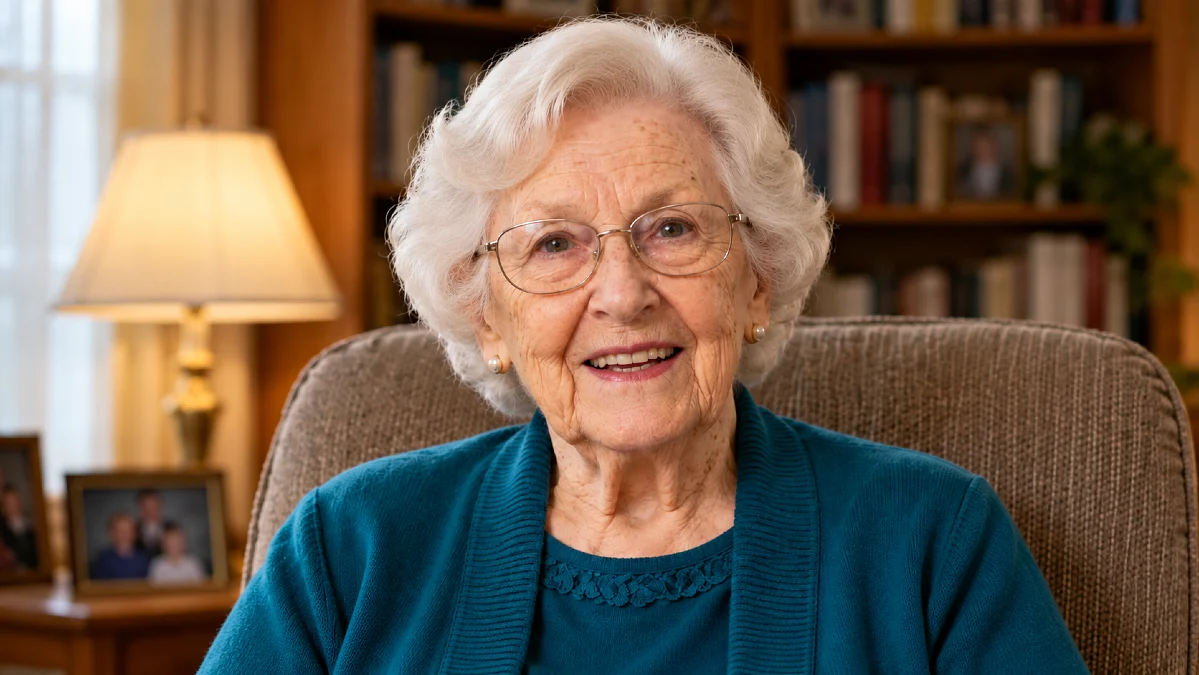
The viral 92-year-old story that inspired this article is fictionalized and uses an AI-generated narrator, according to its own disclaimer, so the personal details should not be treated as a true memoir. The questions it raises, however, deserve serious answers.
Lesson 1: Build Strength While Your Body Gives You More Options

One of the strongest ideas in the original story is that ordinary physical ability is easy to take for granted. Carrying groceries, getting up from the floor, climbing stairs, lifting a suitcase, or walking around a large store rarely feels remarkable until one of those tasks becomes harder.
The frightening claim that muscle lost after 60 is almost impossible to regain does not hold up.
National Institute on Aging research says strength training can help older adults maintain muscle, improve mobility, and become stronger, while current CDC guidance says people 65 and older should include aerobic activity, muscle strengthening, and balance work each week.
For adults 65 and older, CDC recommends at least 150 minutes of moderate-intensity aerobic activity per week, muscle-strengthening activity on at least two days, and activities that improve balance. People who cannot meet those amounts should be as active as their abilities and health conditions allow.
That is more encouraging than the viral version because it means starting later can still matter. The goal is not to exercise because getting older is something to defeat, but to build enough physical reserve to make everyday life easier.
| Viral Claim | What the Evidence Supports |
|---|---|
| Muscle lost after 60 is nearly impossible to regain | Older adults can become stronger through appropriately progressed resistance training |
| Walking is all you need | Aerobic, strength, and balance activities each serve different purposes |
| Physical decline is unavoidable and uniform | Aging varies widely, and activity, health conditions, treatment, environment, and genetics all matter |
| Falls are simply part of getting older | Many fall risks can be reduced |
Falls deserve particular attention because more than one in four adults 65 and older fall each year, according to NIA. Exercise, safer surroundings, vision and hearing checks, appropriate assistive devices, and discussing medication side effects with a health professional may reduce risk.
You do not need to prove anything by walking three miles every day. Build a routine appropriate for your health and abilities, and get professional guidance when pain, dizziness, medical conditions, recent surgery, or balance problems make exercise decisions less straightforward.
Lesson 2: Keep Making Friends Even When You Think You Already Have Enough

People often reach their 50s and 60s with established social circles. There may be old neighbors, former coworkers, couples you have known for decades, siblings, church friends, golf partners, or people who have been around since the children were young.
The mistake is assuming that network will remain unchanged for the next 20 or 30 years. People move, retire, become caregivers, develop health problems, change routines, or die.
That does not mean everyone who lives alone will become lonely. NIA distinguishes loneliness from social isolation and specifically notes that a person can live alone without feeling lonely while another person can feel lonely even when surrounded by others.
A better strategy is to keep your social world open. Maintain old friendships, but allow room for new ones through hobbies, volunteering, classes, neighborhood activities, community groups, walking clubs, faith communities, or anything else you genuinely enjoy.
New friends do not replace the people who knew you at 30. They give your future life more points of connection if circumstances change.
Lesson 3: Talk About Medical Wishes Before Anybody Has to Guess

A medical emergency is one of the worst times for a family to discover that nobody knows what a parent or spouse wanted. The person who has always made the decisions may suddenly be unable to communicate them.
Advance care planning is designed for that situation. NIA explains that advance directives are legal documents that give instructions for medical care if a person cannot communicate their wishes, with living wills and durable powers of attorney for health care among the most common forms.
A health-care proxy is the person chosen to make health-care decisions when you cannot communicate those decisions yourself. State requirements differ, which means the correct forms and rules need to be checked where you live.
The conversation matters just as much as the document. Tell the person you choose what quality of life means to you, what kinds of treatment burdens concern you, who you want involved, and which personal or religious values should shape difficult decisions.
Do not wait for a diagnosis to begin. NIA advises treating advance directives as documents that should be reviewed periodically and when major life circumstances change.
Lesson 4: Make Your Financial Life Understandable to Someone Besides You

Many households have one person who knows everything. That person knows which company handles the homeowners insurance, how the utility bills are paid, where the pension deposit comes from, which bank holds the savings account, and whom to call about investments.
That arrangement works until the person who knows everything is suddenly unavailable.
NIA recommends organizing important personal, health, financial, and legal information and making sure a trusted person knows where important papers can be found. CFPB also recommends planning ahead for the possibility that illness or impaired decision-making could make managing money harder.
A financial power of attorney is different from simply naming an emergency or trusted contact. CFPB explains that a power of attorney is a legal document that authorizes another person to act on your behalf, while a trusted contact generally does not gain access to or control over your money.
Here is a practical starting point.
| Keep Organized | Why Someone May Need It |
|---|---|
| Advance directive and health-care proxy information | Helps communicate your medical choices |
| Will and estate-document locations | Prevents a frantic search during a crisis |
| Current medications and insurance information | Gives helpers accurate health information |
| Bank, retirement and investment contacts | Shows where major financial relationships are held |
| Income sources and recurring bills | Helps essential payments continue |
| Financial POA information, if applicable | Identifies who may have legal authority to act |
| Lawyer, accountant, doctor and adviser contacts | Gives trusted helpers a starting point |
Do not leave passwords, account information, and identity documents where anyone can casually reach them. The goal is secure access for the right person when genuinely necessary.
Legal documents involving powers of attorney, wills, trusts, and estates are affected by state law and individual circumstances. Professional legal advice may be appropriate when the situation is complex.
Lesson 5: Build a Retirement Life Before You Retire

People often spend years planning how much money they will need for retirement and surprisingly little time planning what an ordinary Wednesday will look like.
Work provides more than income. It may also provide routine, social contact, deadlines, status, responsibility, intellectual stimulation, and the simple feeling that somebody expects you to show up.
When work ends, some people love the freedom immediately. Others discover that they miss the structure much more than they expected.
NIA notes that meaningful social and productive activities, including hobbies, volunteering, learning, and community involvement, may support well-being and independence. The right amount differs from person to person, so retirement does not need to become another overloaded schedule.
Before retiring, test whether your life already has something to expand into.
| Ask Yourself | A More Prepared Answer Might Look Like |
|---|---|
| Who will I see regularly? | I already have relationships outside work |
| What gets me out of the house? | I have recurring activities I actually enjoy |
| Where do I feel useful? | Family, volunteering, mentoring, community or part-time work |
| What am I learning? | A hobby, class, skill or personal project |
| What happens on an ordinary weekday? | I have some structure without filling every hour |
You do not need a dramatic second act. Gardening, painting, volunteering at a library, helping grandchildren, working part time, fixing old cars, joining a walking group, or learning something new can all give a week shape.
The point is to stop assuming retirement itself will automatically create a satisfying life. Money can finance retirement, but it cannot decide what makes Tuesday worth getting up for.
Lesson 6: Stop Saving Every Enjoyable Thing for Someday
One of the easiest promises to make in your 50s and 60s is, “We will do that after retirement.” The trip, hobby, family visit, class, renovation, reunion, or ordinary afternoon together gets transferred to some future version of life that is supposed to have more time.
Sometimes waiting is sensible. Money, work, caregiving, disability, health conditions, and family responsibilities create real limits.
The problem begins when almost everything enjoyable gets postponed without a specific reason or date.
This lesson does not mean draining a retirement account because life is uncertain. It means recognizing that time, health, money, and energy should be balanced rather than protecting one resource so aggressively that the others go unused.
Consider a modest “life now” amount within your budget. Even $100 a month equals $1,200 a year that can intentionally go toward dinners, hobbies, visits, short trips, classes, tickets, or small experiences instead of disappearing through unplanned spending.
The meaningful thing may cost nothing. Take the walk, sit on the porch, visit the friend, attend the school performance, cook the family recipe, or spend a weekday afternoon somewhere you keep saying you will visit later.
Lesson 7: Repair Relationships When Repair Is Healthy

Advice about aging often becomes too simple around forgiveness. “Call everyone today before they die” can sound moving while ignoring the fact that some relationships are harmful.
Reconciliation is not automatically appropriate after abuse, exploitation, repeated manipulation, or other unsafe behavior. Forgiving someone internally also does not require giving that person renewed access to your life.
Ordinary estrangements are different. Families sometimes lose years to arguments in which the original issue becomes less important than who should make the first move.
Ask yourself what you actually want, not what pride requires. If the other person died before the conflict was resolved, would you feel relief that the boundary remained, or regret that neither person tried again?
Both answers can be legitimate.
If repair feels safe and worthwhile, the first move does not have to solve everything. A short message saying, “I do not want us to lose more years over this” can be enough to discover whether there is still a relationship to rebuild.
Lesson 8: Give Adult Children More Presence and Less Unsolicited Management

By the time children reach adulthood, their parents may have decades of experience they genuinely want to share. Advice can feel like generosity when you have already made the mistake your son or daughter appears to be heading toward.
Yet adults often want something different from their parents. They may want to talk without having every problem diagnosed and repaired.
A useful habit is asking one question before offering a solution: “Do you want my thoughts, or do you just want me to listen?”
That single sentence respects the adult child’s independence while leaving experience available when it is wanted. It can be especially useful around careers, marriage, parenting, money, housing, and other decisions where unsolicited advice easily starts sounding like control.
Presence is not passive. Showing up, asking thoughtful questions, remembering what matters to them, helping when invited, eating together, and spending relaxed time with grandchildren can build a relationship without requiring you to direct it.
Adult children may still make choices you would not make. Their right to make those choices is part of being adults.
Lesson 9: Write Down the Stories Nobody Else Can Recover

Official records can tell future relatives when you were born, where you lived, and whom you married. They cannot explain what your father’s laugh sounded like or why everyone argued over the same pie recipe every Thanksgiving.
Those details disappear quietly.
Recording family history does not require writing a formal memoir. Label photographs, record a few minutes of audio, save recipes with notes, write down how couples met, explain family nicknames, or describe what ordinary life looked like when you were young.
Try one story each week. In one year, you could have 52 pieces of family history that otherwise existed only in your memory.
Do it even if your memory feels excellent. Preserving memories is not an admission that you expect to lose them; it is recognition that information held by only one person has no backup.
Include difficult stories selectively and thoughtfully. Family history becomes more useful when it preserves personality, context, choices, humor, work, migration, traditions, mistakes, and everyday life rather than only a list of achievements.
Lesson 10: Know What Normal Forgetfulness Does and Does Not Look Like
The claim that everyone eventually forgets everything if they live long enough is wrong. Mild changes in memory can occur with age, but dementia is not a normal or inevitable part of getting older.
NIA says normal age-related changes can include occasionally misplacing things, taking longer to recall information, or forgetting something and remembering it later. More serious problems interfere with everyday activities such as handling bills, communicating, driving, or finding the way home.
This distinction matters because both extremes can cause trouble. People should not panic over every forgotten name, but persistent changes should not automatically be dismissed with “I’m just getting old.”
| More Consistent With Mild Age-Related Forgetfulness | Worth Discussing With a Health Professional |
|---|---|
| Forgetting a date and remembering it later | Repeatedly losing track of dates or seasons |
| Missing an occasional payment | Increasing trouble managing routine bills |
| Sometimes struggling for the right word | Frequent difficulty maintaining a conversation |
| Misplacing something and finding it later | Repeatedly losing items without being able to retrace steps |
| Making an occasional poor choice | A noticeable pattern of impaired judgment |
Memory problems can also have causes other than dementia, including medical conditions and other potentially treatable factors. NIA recommends talking with a health professional when memory or thinking changes are concerning, persistent, or interfering with everyday life.
Writing things down can still be useful for everyone. Calendars, notes, routines, labels, contact lists, and organized records reduce the amount of information a person has to keep in their head every day.
Lesson 11: Redefine Independence Before Pride Defines It for You

People sometimes define independence as doing everything without help. That definition can actually reduce independence when someone avoids a useful tool or service until a preventable problem forces a much bigger change.
A better definition is control. Independence can mean deciding where you live, how you spend your time, whom you trust, what assistance you accept, and what tradeoffs you are willing to make.
A grab bar does not make a person dependent. Neither does grocery delivery, a housekeeper, a cane, a hearing aid, transportation service, yard help, or asking somebody to carry a heavy item.
Home safety changes can also be discreet and attractive. NIA recommends measures such as good lighting, secure flooring, clear walkways, safer stairs, and bathroom grab bars as ways to reduce fall risks at home.
Community support does not have to come entirely from adult children. The federal Administration for Community Living says the Eldercare Locator can connect older adults and families with local resources including meals, home care, transportation, caregiver education, and respite support. Its current phone number is 800-677-1116.
Using a little help before a crisis can sometimes preserve more choice afterward.
Lesson 12: Use Money to Buy Flexibility, Not Just Possessions

Retirement planning can become obsessed with a single number. People ask whether $500,000, $1 million, or $2 million is “enough” without first asking what that money needs to support.
Housing, transportation, insurance, taxes, food, travel, home maintenance, family assistance, health costs, and personal spending can make identical account balances support very different lives.
Start by making recurring expenses annual. A $250 monthly expense is $3,000 a year. If it continues for five years, that is $15,000 before considering inflation, interest, or investment returns.
Small recurring costs deserve attention because retirement budgets operate year after year. Large housing decisions deserve even more scrutiny because downsizing can bring transaction costs, movers, new furniture, HOA or condo fees, insurance changes, and different property taxes.
Do not assume moving automatically saves money. Compare the full cost of staying with the full cost of moving under realistic assumptions.
Social Security decisions should also use your own record rather than somebody else’s rule of thumb. SSA’s current tools allow people to see personalized benefit estimates based on their earnings and compare different retirement-age scenarios.
Money is most useful when it creates options. Cash reserves, manageable fixed costs, appropriate insurance, organized accounts, and realistic spending can give you more room to respond when housing, health, transportation, or family circumstances change.
Lesson 13: The Biggest of These Lessons I Wish I’d Learned in My 50s and 60s Is to Stop Waiting for a Better Time

The original story says the final 30 years pass faster than the first 60. That may describe one person’s experience, but it is not a scientific rule that applies to everyone.
The useful point is simpler. Years can disappear inside ordinary routines while important decisions keep being moved to “later.”
People wait until retirement to reconnect with friends. They wait until a diagnosis to discuss medical wishes, until somebody falls to change the bathroom, until work ends to find a hobby, or until a spouse becomes ill to start doing things together.
Some waiting is unavoidable. Indefinite waiting is different.
Replace vague intentions with dates and actions. Instead of saying, “I need to organize my papers,” choose Saturday morning and begin with one folder. Instead of “we should see them sometime,” suggest a day.
A single week can create more preparation than another year of good intentions.
| Day | One Concrete Action |
|---|---|
| Day 1 | Review whether your routine includes aerobic, strength, and balance activity appropriate for you |
| Day 2 | Call or message one friend you have unintentionally let drift |
| Day 3 | Locate your advance directive, will, POA, or other important papers |
| Day 4 | Record one family story that currently exists only in your memory |
| Day 5 | Take one monthly expense and multiply it by 12 |
| Day 6 | Check one part of your home for lighting, stair, rug, or bathroom hazards |
| Day 7 | Put one enjoyable or meaningful activity on an actual calendar date |
The goal is not to spend your 50s and 60s preparing nervously for everything that could go wrong. Preparation should create freedom, not turn normal aging into a permanent emergency.
A person who has organized documents, maintained relationships, built physical capacity, reviewed the home, thought about money, and discussed future wishes can still face difficult events. The difference is that fewer decisions have to be invented in the middle of the crisis.
Denis Short is a Senior Living writer focused on helping older adults enjoy a safer, more comfortable, and more independent life. He covers aging at home, downsizing, home organization, everyday wellness, senior-friendly design, lifestyle choices, and practical ways to make daily routines easier.
Denis brings a warm, realistic perspective to later-life living, offering clear advice and useful ideas that help seniors and their families create homes, habits, and plans that support confidence, comfort, and independence.