

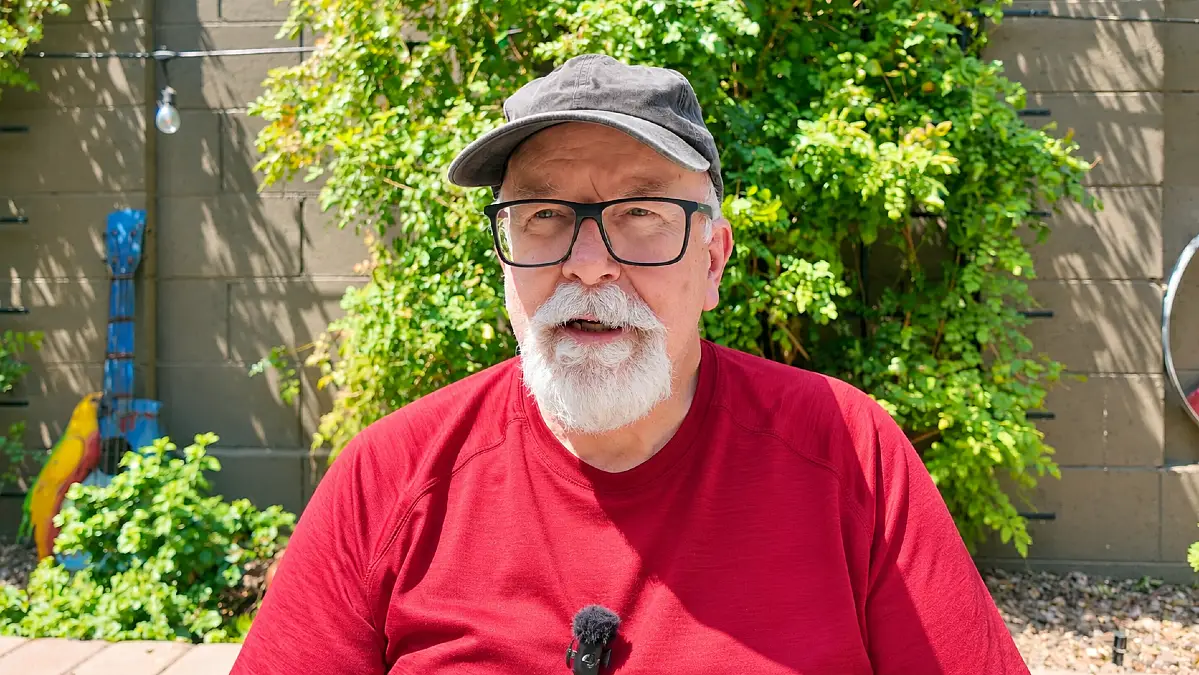
Retirement looked good to Mike at 62, but that did not stop him from wondering whether he was making a mistake.
Leaving a 39-year career meant walking into a life he had planned for but had never actually experienced, and money, boredom, freedom, and the unknown all felt different once the final workday arrived.
Nearly 9 years later, Mike sees those fears very differently.
At 71, his retirement does not look exactly as he imagined it would, but he says it has become peaceful, fulfilling, financially manageable, and increasingly valuable because his time finally belongs to him.
At 62, Mike Wasn’t Regretting Retirement. He Was Afraid of the Unknown

Mike had thought about retirement before leaving work. He had plans, ideas about traveling, and expectations about how freedom might feel, but none of that could answer the most basic question: What would being retired actually feel like?
That uncertainty created fear. Mike did not describe it as overwhelming or debilitating, but he clearly remembered wondering whether the life waiting on the other side of work would turn out the way he hoped.
That distinction matters because nervousness before retirement does not automatically mean someone is financially or emotionally unprepared. A person can have run the numbers, thought through the decision, and still feel unsettled when decades of routine are about to disappear.
Current retirement data makes Mike’s age less unusual than some readers may assume. In EBRI’s 2026 Retirement Confidence Survey, the median actual retirement age reported by retirees was 62, and nearly half said they had retired earlier than planned.
Mike’s story is still only one person’s experience. Health, money, family obligations, insurance, pensions, job satisfaction, and personal temperament can make leaving at 62 a completely different decision for another household.
The change worth examining is what happened after Mike made that decision.
The contrast between 62 and 71 looks less like a dramatic transformation and more like a gradual settling into a different way of living.
| At 62 | At 71 |
|---|---|
| Retirement still felt unknown | Retired life feels familiar |
| He wondered whether the money would work | He says his needs are being met |
| He wondered how he would fill his days | He is comfortable with open time |
| He expected retirement to follow a plan | He accepts that the plan changed |
| Work still shaped his idea of time | He values controlling his own schedule |
The biggest difference is confidence gained from experience. At 62, Mike could only predict what retirement might be; at 71, he has almost nine years of ordinary days behind him.
Retirement Became Better When Mike Stopped Trying to Predict It

Before retiring, Mike had ideas about what he would do. Some happened, including some travel, while other expectations eventually seemed less necessary than they had before he left work.
He does not describe those abandoned expectations as failures. Instead, his account suggests that retirement became more comfortable when he stopped measuring it against the picture he had created while still employed.
That is an overlooked problem with retirement planning. People often have to plan a life they have never lived, so even a sensible plan can include assumptions that later turn out not to matter very much.
At 71, Mike’s standard appears simpler. He enjoys his life, feels comfortable in retirement, and no longer carries the same doubts about whether leaving work was the right decision for him.
That does not mean retirees should stop planning. It means a retirement plan may need enough room for the person living it to change.
The Money Question Did Not Disappear the Moment Mike Retired

Mike was candid about one of his biggest concerns: money. Before retirement, he wondered whether finances that appeared workable on paper would remain workable once employment income stopped.
He also worried about the possibility of a financial failure after leaving at what he considered a relatively early age. Nearly nine years later, he says that catastrophe never arrived, although his finances are tighter than when he was employed.
That combination is more useful than pretending retirement removes every money concern. A household can feel financially stable while still paying closer attention to spending than it did during the working years.
The 2026 EBRI survey shows why that distinction matters. Most surveyed retirees expressed confidence in their financial position, but a substantial share also found retirement more expensive than expected.
| 2026 retiree finding | Reported result | Why it matters |
|---|---|---|
| Confident about having enough money for retirement | 73% | Many retirees feel reasonably secure |
| Standard of living rated excellent or very good | 47% | Retirement is not universally defined by financial strain |
| Having roughly the retirement lifestyle envisioned | About two-thirds | Expectations often work out reasonably well |
| Retirement spending higher than expected | 41% | Confidence does not eliminate cost surprises |
Mike’s experience fits comfortably inside that more complicated picture. He says he does not have enormous wealth, yet he also says he is not lacking what he needs.
For someone approaching retirement, that may be a better question than whether retired life will feel financially identical to working life. The practical issue is whether dependable income, savings, insurance, taxes, housing costs, and expected withdrawals can support the life the household actually intends to live.
Retiring at 62 Does Not Mean Mike Claimed Social Security at 62

This distinction is especially important because Mike’s supplied account says he left work at 62. It does not state when he began receiving Social Security retirement benefits.
The Social Security Administration treats those as separate decisions. A person can stop working before starting Social Security, continue working while receiving benefits, or coordinate the two dates in several different ways.
For today’s readers, a few age milestones deserve to be kept separate. These are 2026 rules and reference points, not claims about what Mike personally chose when he retired in 2017.
| Age | 2026 significance | What it does not automatically mean |
|---|---|---|
| 62 | Earliest general age for Social Security retirement benefits | You must claim just because you stopped working |
| 65 | General Medicare eligibility milestone | Social Security full retirement age |
| 67 | Full retirement age for people attaining 62 in 2026 | Everyone should wait until 67 |
| 70 | Delayed Social Security credits stop increasing after this age | Everyone should delay until 70 |
SSA says a person reaching 62 in 2026 who starts retirement benefits at 62 can receive a benefit about 30% below the amount payable at a full retirement age of 67.
Someone born in 1960 or later who waits from 67 until 70 can receive 124% of the full-retirement-age amount, although personal circumstances determine whether delaying makes sense.
Medicare generally becomes relevant at 65, separately from Social Security full retirement age. That separation matters greatly for someone considering leaving employer health coverage before 65.
Note: This article provides general educational information, not individualized financial, tax, investment, Medicare, or Social Security advice. Retirement decisions depend on personal finances, health coverage, family circumstances, and current program rules.
Mike Still Remembers the Moment Work Became the Past

Some retirement changes show up on spreadsheets. Mike remembers another one as the sound of heavy doors closing behind him.
He had worked for the same employer for 39 years in a high-security building. His wife joined him for his going-away gathering, and when the two of them finally left, Mike passed through security, walked through the building’s heavy doors, headed into the daylight, and eventually drove through the security gate for the last time.
That was when retirement freedom stopped being an idea.
There would be no Monday morning return. There would be no rush-hour commute and no need to pass back through those doors because a schedule required him to be there.
Mike says he has never returned to the workplace. He once drove past the building while going somewhere else, but he has not felt the need to go back.
The people he worked with were not the problem. Mike says he liked them.
What he appreciated leaving behind was the obligation.
He Thought Boredom Might Become a Problem. It Didn’t

One of Mike’s early questions was what he would do with all his time. Would retirement require new hobbies just to keep the days from feeling empty?
Almost nine years later, he gives a surprisingly simple answer: no.
Mike says his days fill themselves with things he wants to do, even when those things would look unimpressive on a calendar. He makes videos, spends time around his grandchildren, and enjoys days that can start quietly and remain quiet.
More importantly, he stopped treating empty time as a problem that required a solution.
When space appears in his day, he sometimes lets it remain open. That is a very different message from the common retirement advice that tells people they immediately need a long hobby list, volunteer schedule, part-time job, travel calendar, or elaborate new routine.
For some retirees, those things are deeply valuable. For Mike, freedom seems to come partly from not having to replace one packed schedule with another.
That does not make social connection unimportant. The National Institute on Aging notes that social isolation and loneliness can affect older adults’ health, while meaningful social and productive activities may support well-being.
But being alone and being lonely are not the same thing. NIA specifically distinguishes social isolation from loneliness, which helps explain why one retiree may love a peaceful afternoon while another may feel cut off and need more regular connection.
Mike appears comfortable with quiet. Someone else may thrive with far more structure.
By 71, Mike Realized How Much Stress Had Once Felt Normal

One of Mike’s most interesting observations did not arrive during his final week at work. It became clearer only after years away from the job.
Looking backward, he says he can now recognize how much stress had been built into working life. Meetings, deadlines, commuting, management expectations, and operating on somebody else’s schedule had become ordinary enough that he did not fully appreciate their weight until they disappeared.
That changed how he values retirement.
Mike does not say every working day was miserable. Instead, distance gave him a comparison he did not have while still employed.
He now sees a peaceful day differently because he remembers what it replaced. He can decide when to handle something, when to put it off, and when to do very little at all.
After 39 years of being accountable to an employer’s clock, ownership of time became one of retirement’s biggest rewards.
The Retirement Mike Loves at 71 Is Not Exactly the One He Planned at 62
This may be the most useful part of his story.
Mike had plans before retirement. Some happened, some changed, and some became less important once he had enough experience to know what retired life actually felt like.
Yet he does not describe himself as disappointed.
At 71, the fact that retirement changed shape seems to bother him far less than it might have at 62. His standard is no longer whether every pre-retirement idea came true.
The standard is whether the life works for him now.
That difference can take pressure off anyone trying to design the next 20 or 30 years before leaving the office. Retirement planning still matters, especially financially, but the lifestyle portion may work better as a framework than a script.
What Mike’s Experience Can Teach Someone Standing at 62 Today

Mike’s retirement does not prove that everyone should stop working at 62. His finances, family, career, health coverage, preferences, and opportunities are his own.
What his story can do is help someone ask better questions.
The financial question matters, but so does the Tuesday-morning question. A person preparing to retire needs to think about what disappears with the paycheck: routine, workplace conversation, professional identity, deadlines, a reason to leave the house, and the sense that someone else has already decided how the day will be spent.
The following check is not designed to produce a pass or fail score. It simply separates practical questions that may be easier to address before the final workday arrives.
| Area | Question to ask before retiring | Possible next step |
|---|---|---|
| Money | Can expected income and reasonable withdrawals cover spending after taxes? | Test a retirement budget before leaving |
| Health coverage | What coverage applies before and after age 65? | Confirm employer, ACA, retiree, and Medicare timing |
| Time | What would an ordinary weekday look like without work? | Test a few unstructured days rather than planning only vacations |
| Relationships | Which connections currently depend on the workplace? | Build contact outside work before retiring |
| Freedom | What obligations are you actually hoping to leave behind? | Identify what retirement should remove, not only what it should add |
The final question may be the one Mike’s story answers best. Retirement was valuable to him partly because of what disappeared: commutes, meetings, supervisors’ schedules, workplace time pressure, and the feeling that much of the day belonged to someone else.
What replaced those things was not nonstop entertainment. It was control.
Peace Turned Out to Be More Valuable Than Constant Activity
Retirement advertising often makes the years after work look like a permanent vacation. Other advice swings in the opposite direction and warns retirees to immediately create purpose, schedules, projects, hobbies, and goals.
Mike’s account sits somewhere quieter.
He traveled some. He makes videos. He enjoys seeing his grandchildren. He also enjoys peaceful days that would probably look rather uneventful from the outside.
And that is the point.
At 62, he wondered what he would do with all that freedom. At 71, he no longer seems to believe freedom has to justify itself by staying busy.
For someone who spent nearly four decades working, the ability to decide that nothing urgent needs to happen this afternoon can itself be something valuable.

Marco Kelley is a Retirement writer focused on helping older adults make confident, informed decisions about life after work. He covers retirement planning, Social Security, savings, taxes, healthcare costs, senior benefits, housing, and everyday financial choices. Marco brings a practical, straightforward approach to topics that can often feel complicated.
His goal is to give retirees and those nearing retirement clear guidance, useful ideas, and realistic strategies for building a more secure and comfortable future.