


Two people can collect the same paycheck for decades and still end up in different financial lives. The gap is often not a secret stock pick or lucky break, but boring habits that make you rich slowly by keeping more cash and turning part of each paycheck into assets.
That matters because wealth is mostly invisible while it is being built. A newer car and frequent takeout are easy to see; an automatic 401(k) contribution, paid-off credit card, and growing emergency fund are not.
These 13 habits show where the quiet math works and where frugality advice gets exaggerated.
Why These Boring Habits Can Make You Richer Without Looking Rich

There is no universal dollar amount that officially makes someone “rich.” Income is what flows into a household, while wealth is what remains after assets such as cash and investments are reduced by debts and other liabilities.
That distinction explains how hypothetical coworkers earning identical salaries can slowly separate financially. One may increase investments whenever income rises, while the other can earn just as much but add payments whenever additional money appears.
Current data show why the boring details matter. The Federal Reserve reported that 63% of adults in 2025 could cover a $400 emergency using cash or its equivalent, while only 35% of non-retirees said their retirement saving was on track.
Here are several numbers that put the habits below into perspective. They are national benchmarks rather than targets every household should follow.
| Financial Metric | Current Figure | Why It Matters |
|---|---|---|
| Adults able to handle $400 emergency with cash or equivalent | 63% in 2025 | A basic cash buffer can keep a surprise expense from becoming debt. |
| 2026 401(k) employee limit | $24,500 | Tax-advantaged accounts provide substantial saving capacity. |
| 2026 IRA contribution limit | $7,500 | Workers without large workplace contributions still have another retirement-saving option. |
| Average new-car payment | $770 a month, Q1 2026 | Transportation can become a large fixed claim on future income. |
| Food away from home | $3,945 average annual spending in 2024 | Convenience spending is meaningful, although cutting all restaurant meals is unnecessary. |
| Credit-card accounts assessed interest | 22.15% average rate, Q2 2026 | Revolving balances can work against wealth accumulation quickly. |
The lesson is not that financially successful households never eat out or finance cars. It is that repeated expenses compete with repeated saving, and the outcome becomes increasingly visible after years rather than weeks.
Habit 1: Automate Money Before You Can Spend It

The standard saving plan is surprisingly weak: pay the bills, enjoy the month, then save whatever happens to remain. The problem is that available money tends to attract a purpose before the month ends.
Automatic transfers reverse that order. The CFPB specifically recommends recurring transfers or splitting direct deposit so part of a paycheck can move to savings without requiring a new decision every pay period.
The amount does not need to be impressive at first. A worker who automatically moves $40 every payday is building a stronger system than someone who intends to save $500 whenever life becomes less expensive.
The habit becomes especially powerful because automation reduces reliance on motivation. Wealth accumulation becomes something happening in the background rather than another task that must be remembered twice a month.
Habit 2: Stop Leaving Employer Match Money Behind

A workplace retirement match is different from an ordinary investment return because it is an employer contribution tied to the plan’s rules. Employees should check their own plan documents because match formulas, vesting requirements, and eligibility vary.
The broader evidence for automatic workplace saving is strong. Vanguard’s 2026 How America Saves report, covering nearly five million participants, reported record 86% participation among eligible employees, a 12.1% average total savings rate, and a record employer matching contribution of 4.7% in its plan population.
The IRS allows employees to contribute as much as $24,500 to a 401(k), 403(b), or most governmental 457 plans in 2026 before applicable catch-up rules. The IRA limit is $7,500, although tax treatment and eligibility depend on the account and household circumstances.
Maxing out those accounts will be unrealistic for many households. Checking the match, contributing what is manageable, and gradually increasing the percentage is a much more useful habit than waiting until enough money suddenly feels available.
Habit 3: Keep Part of Every Raise
Lifestyle inflation happens when spending expands as income expands. A raise that could increase financial flexibility instead becomes a larger car payment, higher rent, upgraded subscriptions, more restaurant spending, and a more expensive normal.
There is nothing wrong with enjoying higher income. The useful habit is simply deciding how much of the raise gets upgraded before the first larger paycheck arrives.
Consider a hypothetical worker whose take-home income rises by $5,000 a year. If $3,000 of that increase, or $250 monthly, were invested for 20 years and earned a hypothetical 7% annual return, it would grow to roughly $130,000 under monthly compounding.
That is not a forecast, and actual market returns will vary. It shows why capturing even part of several raises can matter more than obsessing over tiny purchases while letting major lifestyle costs rise unchecked.
The longer the habit runs, the more visible the arithmetic becomes. The following examples assume monthly contributions, a hypothetical 7% annual return compounded monthly, 25 years, and no taxes, fees, or withdrawals.
| Monthly Amount | Total Contributions | Illustrative Value After 25 Years |
|---|---|---|
| $100 | $30,000 | About $81,000 |
| $250 | $75,000 | About $202,500 |
| $500 | $150,000 | About $405,000 |
| $750 | $225,000 | About $607,500 |
Investor.gov provides a compound-interest calculator for exactly this type of illustration, but it also makes clear that an estimated return is an assumption rather than a promise.
The dramatic part is not the 7% assumption. It is how much of the ending value comes from having the same contribution happen hundreds of times without needing another heroic decision.
Habit 4: Keep a Reliable Car After the Payment Ends

“Always buy used” is too simplistic. A badly chosen used vehicle with high financing costs and major repairs can be more expensive than a reliable newer vehicle kept for many years.
The stronger habit is resisting the urge to treat the end of a car loan as an automatic signal to start another one. Experian reported average Q1 2026 payments of $770 for financed new vehicles and $531 for financed used vehicles, with average loan terms of roughly 69.5 and 67.7 months respectively.
Someone who safely keeps a paid-off car for another two or three years creates a valuable window in which a former car payment can become savings, investments, or cash for the next vehicle. Maintenance still costs money, so the right comparison is total ownership cost rather than “payment versus no payment.”
Transportation deserves attention because it is already one of the largest household spending categories. BLS data show average transportation expenditures of $13,318 per consumer unit in 2024, second only to housing among the major categories.
Habit 5: Refuse to Normalize Credit-Card Interest
Paying a credit-card statement in full is boring because nothing exciting happens. There is no reward screenshot, investment chart, or story to tell at work.
The alternative can be expensive. Federal Reserve data for Q2 2026 show an average 22.15% interest rate on commercial-bank credit-card accounts that were actually assessed interest.
At that rate, a persistent $5,000 balance represents roughly $1,100 of annualized interest before accounting for changing daily balances, compounding conventions, fees, and payments. That does not mean every borrower will pay exactly that amount, but it shows why eliminating high-rate revolving debt can have such a large financial impact.
This habit should not become financial shaming. Some households rely on credit during job loss, medical costs, emergencies, or periods when basic expenses exceed income, so the practical goal is reducing expensive balances when resources allow.
Habit 6: Keep a Cash Buffer Nobody Can See
Emergency savings rarely look impressive. The money may sit quietly for months earning less than long-term investments could earn, which can make it feel unproductive.
Its job is different from an investment portfolio. Emergency savings buy the ability to handle a repair, deductible, temporary income disruption, or urgent trip without immediately turning the event into expensive debt.
The Federal Reserve found that 63% of adults in 2025 could cover a hypothetical $400 emergency with cash, savings, or a credit card they would pay off at the next statement. Major vehicle repairs or replacement were the most commonly reported unexpected major expense, mentioned by 30% of adults.
A household does not need to jump immediately from zero savings to six months of expenses. A first $500, then $1,000, then one month of essential bills creates measurable resilience at each stage.
Habit 7: Rotate a Few Reliable Meals

The supplied “boring rich” idea gets one thing right about food: predictability can be financially useful. A small group of meals that a household already knows how to cook makes grocery lists easier and lowers the odds of buying specialty ingredients that get used once.
There is no credible national rule showing that rotating five meals automatically cuts grocery spending by 30% or 40%. The saving depends on household size, dietary needs, local prices, food preferences, and what was being purchased before.
The useful behavioral mechanism is simpler. Fewer last-minute dinner decisions can reduce the temptation to solve an empty refrigerator or missing ingredient with takeout.
BLS data show that the average consumer unit spent $6,224 on food at home and another $3,945 on food away from home in 2024. Those are averages rather than prescribed budgets, but they show why food habits deserve attention.
Habit 8: Eat the Food You Already Paid For
One of the strongest numbers in the original concept concerns food waste, but it needs correcting. The familiar “30% to 40%” statistic refers broadly to food loss and waste across the U.S. food supply, not a claim that every household throws away 30% to 40% of its grocery purchases.
EPA’s newer consumer analysis provides a much cleaner household number. Its 2025 report estimated the cost of food waste at about $728 per person annually, or $2,913 for a household of four, with roughly 11% of household food spending going to food that is wasted.
That makes a “use what is already here” night financially reasonable without pretending leftovers will create a fortune. Checking the freezer before shopping, moving older items forward, and planning one meal around ingredients already open are small inventory-management habits.
Habit 9: Pack Some Lunches and Make Routine Drinks at Home

Coffee is probably the most abused example in personal finance. A $6 drink does not explain why housing is unaffordable, wages differ, medical bills hurt, or retirement accounts remain underfunded.
Repeated convenience spending still has a cost, however, and that cost is easy to calculate honestly. The right question is not “Should nobody buy coffee?” but “Would this particular expense be worth more to me somewhere else?”
Here are three transparent examples rather than national averages. The first two use hypothetical prices, while the food-waste example starts with EPA’s four-person household estimate.
| Repeated Choice | Illustrative Annual Difference | If Invested Monthly for 25 Years at 7% |
|---|---|---|
| $6 workday drink vs. $1 home drink, 5 days × 48 weeks | $1,200 | About $81,000 |
| $15 lunch vs. $5 packed lunch, 3 days × 48 weeks | $1,440 | About $97,200 |
| Reduce EPA-estimated four-person household food waste by 25% | About $728 | About $49,200 |
These future values are hypothetical illustrations, not predictions. They assume every dollar of the difference is actually invested, which is precisely where most “skip coffee and become wealthy” arguments fall apart.
If someone stops buying lunch but quietly spends the saved $10 somewhere else, net worth does not change. A small spending habit becomes a wealth habit only when the difference gets assigned to debt reduction, savings, or investments.
Habit 10: Make Impulse Buying Slightly Inconvenient
Online shopping has removed many of the small pauses that once separated wanting something from paying for it. Saved cards, shopping apps, recommendations, and instant checkout can move the decision from “Do I want this?” to “It’s already ordered.”
There is no need to claim online shoppers universally spend some fixed percentage more. A more defensible behavioral strategy is to deliberately add friction where present bias, the tendency to favor immediate rewards, creates trouble.
Remove stored payment details from the sites where impulse spending happens most often. Put nonessential purchases over a personally chosen amount on a 24- or 48-hour list, then decide again after the initial urge has cooled.
The goal is not to make buying miserable. It is to make deliberate purchases easy and accidental purchases slightly harder.
Habit 11: Audit Recurring Bills Twice a Year

Subscriptions are especially easy to ignore because their biggest feature is repetition. A $12 charge rarely feels important enough to investigate, but six unused $12 charges create a $72 monthly leak and $864 annual cost.
The problem is significant enough that recurring billing practices remain an active consumer-protection issue. In 2026, the FTC continued enforcement involving allegedly hidden subscription terms, unauthorized charges, and difficult cancellation practices.
Twice a year, scan several months of bank and card statements for recurring charges. Cancel what no longer earns its place, then review insurance, internet, phone, storage, software, and memberships that may have quietly become more expensive.
This habit can also work in reverse. A subscription used constantly and priced reasonably may be excellent value, so the aim is not cancellation for its own sake.
Habit 12: Make Investing Deliberately Boring

Wealth-building can become less effective when investors believe activity itself is progress. Constant trading, chasing recent winners, reacting to headlines, and buying complicated products can create taxes, fees, concentration risk, and emotional mistakes.
Investor.gov describes diversification as spreading money among investments to reduce the damage one failed investment can cause. It also warns that even small differences in investment fees can create large differences in long-term results.
The SEC illustrates this with a hypothetical $100,000 portfolio earning 4% annually for 20 years. After annual fees, it estimates roughly $208,000 at 0.25%, $198,000 at 0.50%, and $179,000 at 1.00%, demonstrating how recurring costs compound against the investor.
Boring investing does not mean risk-free investing. It means understanding the investments, diversifying appropriately, controlling costs, contributing consistently, and avoiding the belief that constant action is necessary.
Vanguard’s 2026 retirement-plan research offers a useful behavioral clue. Among its nearly five million participants, only 5% traded during periods of volatility in 2025, while overall participation and contribution behavior remained strong.
Note: Investing involves risk, including possible loss of principal. This article provides general educational information rather than individualized investment, tax, or financial advice.
Habit 13: Track Net Worth Instead of Looking Wealthy
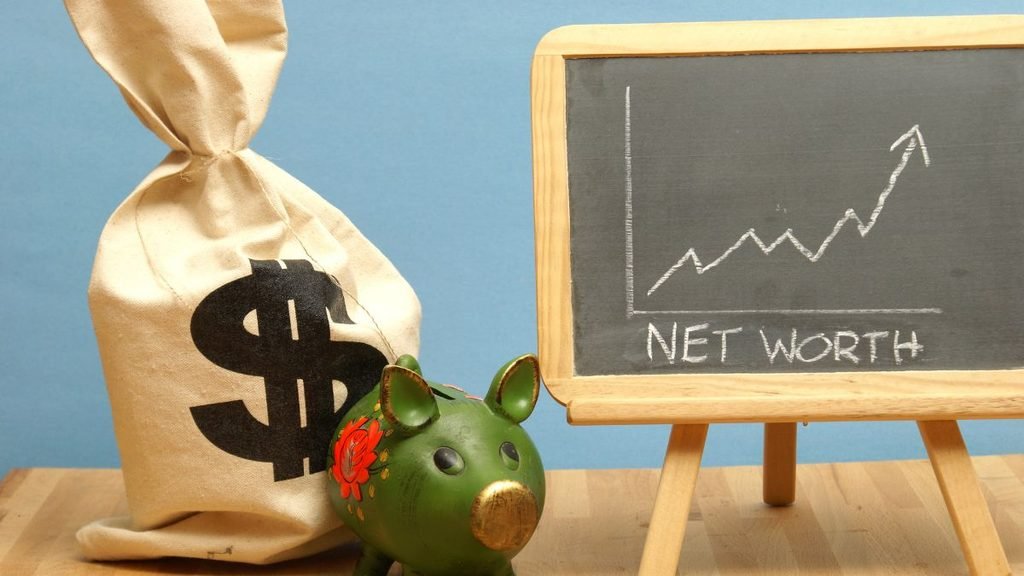
A household can receive raises while becoming financially weaker if liabilities grow faster than assets. Looking at income alone therefore misses an important part of the story.
Once a month, add major financial assets such as cash and investment balances, then subtract debts such as credit cards, auto loans, student loans, and other liabilities. The result is a simplified view of net worth, although home values and other assets may require more careful estimates.
Monthly tracking also changes what feels rewarding. Paying off $1,000 of debt becomes visible progress, even though nobody at work can see it, while a $1,000 purchase becomes easier to recognize as a tradeoff rather than simply another object.
That shift matters because status comparison encourages visible consumption. Quiet wealth directs more attention toward financial choices that create options later.
The biggest misconceptions become clearer when the 13 habits are viewed together. None of them requires pretending that every inexpensive choice is financially superior.
| Common Belief | Reality | Better Way to Think About It |
|---|---|---|
| A high salary means someone is wealthy | Income can be high while debt and spending are also high | Track assets, liabilities, saving rate, and cash flow |
| Buying used is always smarter | Repairs, financing, reliability, and ownership length all matter | Compare total ownership cost |
| Coffee keeps people poor | Small recurring spending matters, but large fixed costs usually carry more weight | Keep what you value and redirect savings intentionally |
| Emergency cash is “dead money” | Its purpose is short-term resilience, not maximum return | Give cash and investments different jobs |
| More complex investing must be better | Complexity can add fees and risks without guaranteeing better returns | Favor understandable, diversified investments suited to the goal |
The central pattern is therefore bigger than frugality. These habits repeatedly increase the percentage of income that survives long enough to become an asset or reduce a liability.
Why Small Habits Work Only When the Money Has Somewhere to Go
Suppose someone cuts $150 of monthly spending. If that $150 simply disappears into unrelated purchases, the household may feel more disciplined without becoming financially stronger.
Give the money a destination and the outcome changes. At a hypothetical 7% return, $150 monthly invested for 25 years would grow to roughly $121,500, while directing it toward high-interest debt could create a different but potentially valuable result by reducing future interest charges.
This is the missing half of many frugality stories. Saving money on a purchase is not the same thing as saving money in an account.
The quietly powerful routine therefore has two parts: stop a leak and redirect the difference. That second step is what converts a boring lifestyle decision into measurable financial progress.
A 30-Day Boring-Wealth Reset
Trying all 13 habits at once is more likely to create annoyance than consistency. A better approach is to install several automatic systems first, then deal with discretionary spending after the important money has already been assigned.
The following plan keeps the first month simple. It can be adjusted for income volatility, debt obligations, family needs, and other priorities.
| Priority | What to Check | What to Do Next |
|---|---|---|
| Payday | Current automatic savings | Add or increase one recurring transfer by an affordable amount |
| Workplace plan | Contribution rate and employer match | Confirm the match formula and decide whether the contribution can rise |
| High-interest debt | APRs and revolving balances | Direct available extra cash toward the most expensive balance |
| Emergency savings | Current liquid reserve | Build the next reachable milestone rather than waiting for a perfect target |
| Monthly spending | Food waste, recurring charges, vehicle costs, impulse purchases | Pick the two easiest leaks and redirect the savings |
| Month-end | Assets and liabilities | Record net worth and compare it with the previous month |
The first month does not need to produce dramatic results. Its purpose is to make next month’s good decisions require less effort than this month’s did.
Once those systems are running, raises and windfalls can strengthen them. That is much easier than rebuilding a budget every time income changes.