
Work used to provide a reason to get up, people to see, and tasks that mattered. After retirement, even a full calendar can feel short on purpose.
That gap can be frustrating, especially when hobbies are enjoyable but do not offer the same feeling of helping someone. Without a regular place to contribute, days may start to blend together.
These 25 volunteer ideas for retirees who want to feel useful again offer practical ways to share your time, skills, and attention. You will find simple local projects, flexible roles, and volunteer work you can do from home.
1. Volunteer at a Local Food Bank

Food banks are a good starting point for retirees who enjoy practical work and seeing immediate results. Volunteers help sort donated groceries, pack food boxes, organize shelves, and prepare supplies for distribution.
Feeding America works with food banks across the United States, and many local organizations offer morning or afternoon shifts. Some welcome occasional helpers, while others prefer a regular weekly commitment.
You do not need special experience for most basic tasks. Ask whether seated packing, labeling, or greeting visitors is available if standing for long periods is uncomfortable.
A two-hour shift once a week can provide a useful routine without taking over your retirement schedule.
2. Deliver Meals With Meals on Wheels
Community service • Social connection
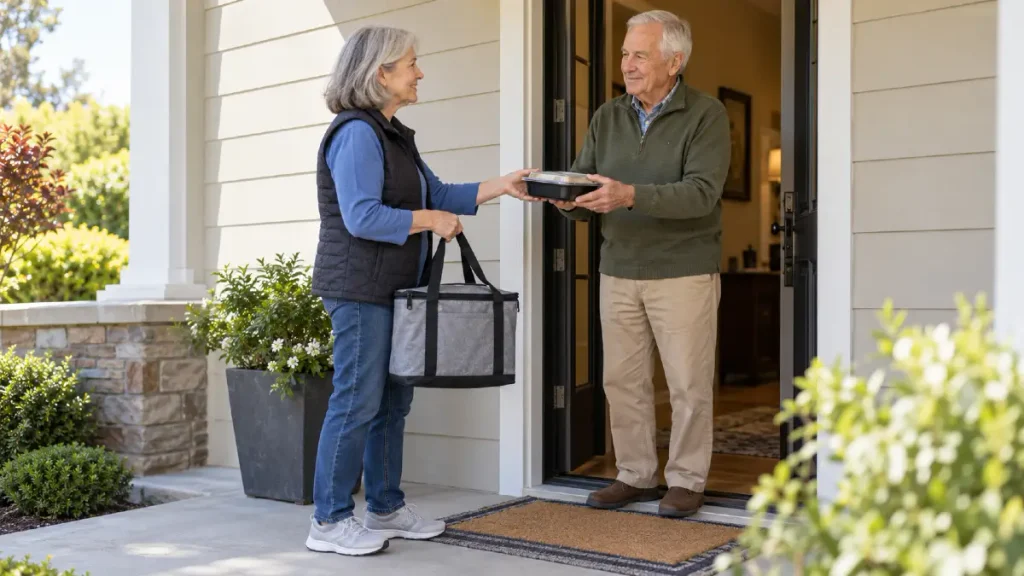
Meals on Wheels volunteers deliver prepared meals to older adults who may have difficulty shopping or cooking. Along with bringing food, they offer a friendly greeting and an opportunity for brief social contact.
Many local programs use established delivery routes, making the work easier to plan around other activities. Volunteers may serve weekly, monthly, or whenever extra help is needed.
Before signing up, ask about:
- Whether you need your own vehicle and insurance.
- How long a typical delivery route takes.
- Whether background screening is required.
- Whether kitchen or office roles are available instead.
This opportunity can suit retirees who enjoy driving, meeting neighbors, and following a familiar schedule.
3. Serve Meals at a Community Kitchen
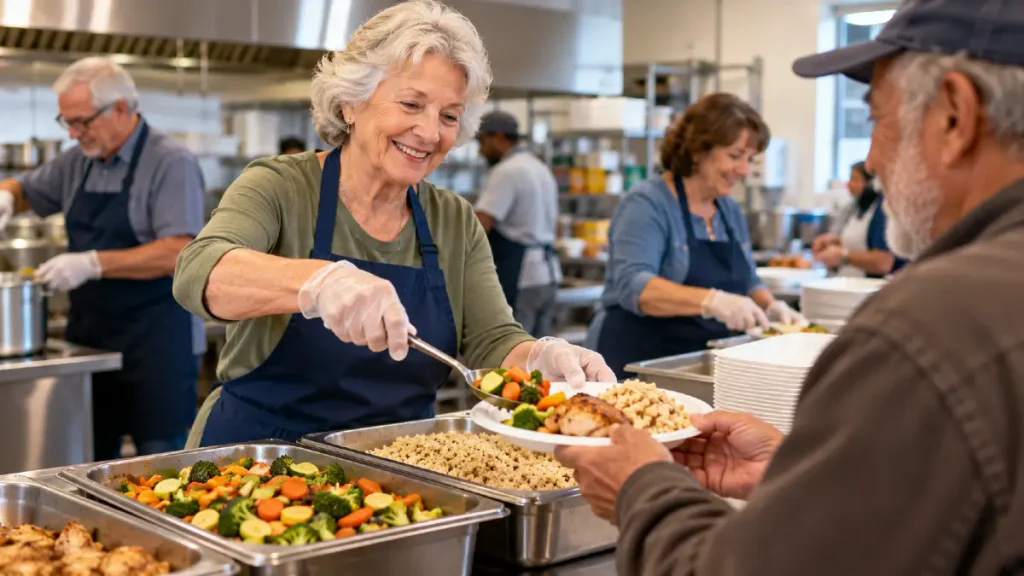
Community kitchens, shelters, and neighborhood meal programs often need volunteers to prepare and serve food. Some provide daily meals, while others organize weekly dinners or special holiday gatherings.
You might set tables, prepare ingredients, serve plates, or clean up afterward. These jobs allow you to work alongside other volunteers while helping people access a meal.
Food safety rules vary by organization. Kitchen staff may provide training, and some preparation duties may require additional instruction.
If you prefer lighter work, ask about welcoming guests or organizing meal tickets. A regular community dinner can become a pleasant part of your weekly routine.
4. Grow Vegetables for a Community Food Pantry
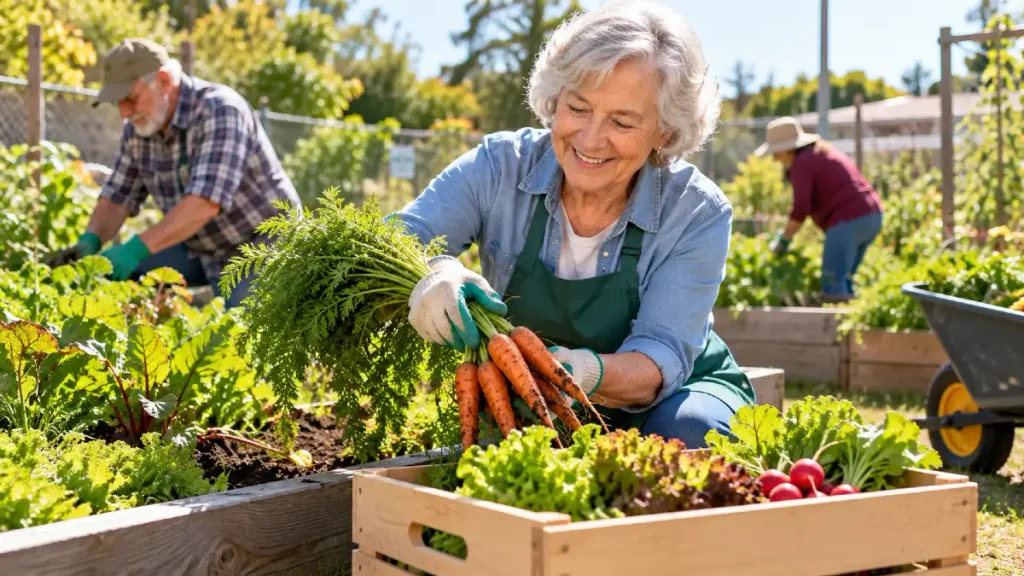
Community gardens sometimes grow fresh produce for local food pantries and neighborhood meal programs. Retirees who enjoy gardening can help plant seeds, water vegetables, pull weeds, or prepare produce for donation.
This is a useful choice for people who like outdoor activities but do not want a demanding exercise program. Gardening duties can often be shared among several volunteers.
Consider starting with a morning gardening shift during mild weather. Raised beds, accessible paths, and lightweight tools may make certain gardens easier to use.
Contact a community garden coordinator or local Cooperative Extension office to learn whether a garden near you donates its harvest.
Quick comparison: Food-related volunteer opportunities
| Volunteer role | Typical setting | Main consideration |
|---|---|---|
| Food bank | Indoor warehouse or pantry | Ask about lifting limits |
| Meal delivery | Neighborhood routes | Transport and fuel costs |
| Community kitchen | Indoor shared kitchen | Food safety procedures |
| Community garden | Outdoor garden | Weather and accessible paths |
These opportunities usually do not require a participation fee, but transportation, parking, and personal supplies may create small expenses.
5. Help Children Read at a Local Elementary School

Many elementary schools welcome volunteers who can listen to children read, practice vocabulary, or offer encouragement during reading activities.
You do not need to be a retired teacher to make a difference. Patience, clear communication, and an interest in helping children learn are valuable qualities.
AmeriCorps Seniors also operates the Foster Grandparent Program, which connects volunteers age 55 and older with children who need extra support.
Most schools require an application and background screening before volunteers can work with students. Contact the school office or district volunteer coordinator to ask about opportunities during the school year.
A regular morning reading session can give retirees something enjoyable to prepare for each week.
6. Tutor Adults Learning English or Reading Skills
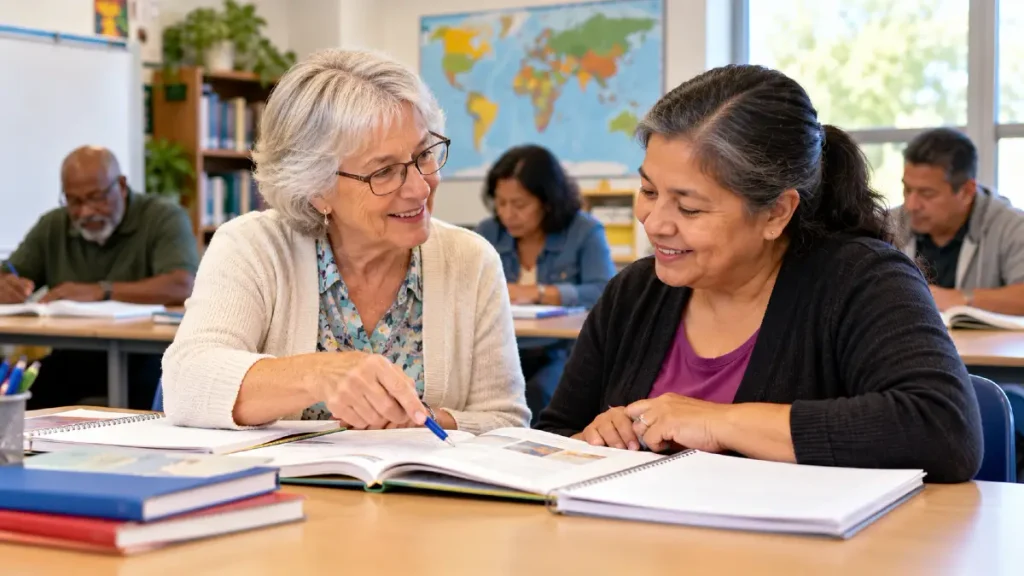
Adult education programs often need volunteers who can help learners practice English, improve reading skills, or build confidence with everyday communication.
Sessions may involve reading short passages, practicing conversations, or helping someone understand a simple form. Some programs pair volunteers with one student, while others organize small groups.
Local libraries, community colleges, and adult literacy organizations are good places to ask about these opportunities.
You may receive teaching materials or basic tutor training before starting. Strong listening skills and a willingness to follow the program’s teaching methods matter more than having a formal education degree.
This can be especially rewarding for retirees who enjoy meaningful conversations and learning about different cultures.
7. Become a Volunteer Leader With a Local 4-H Club
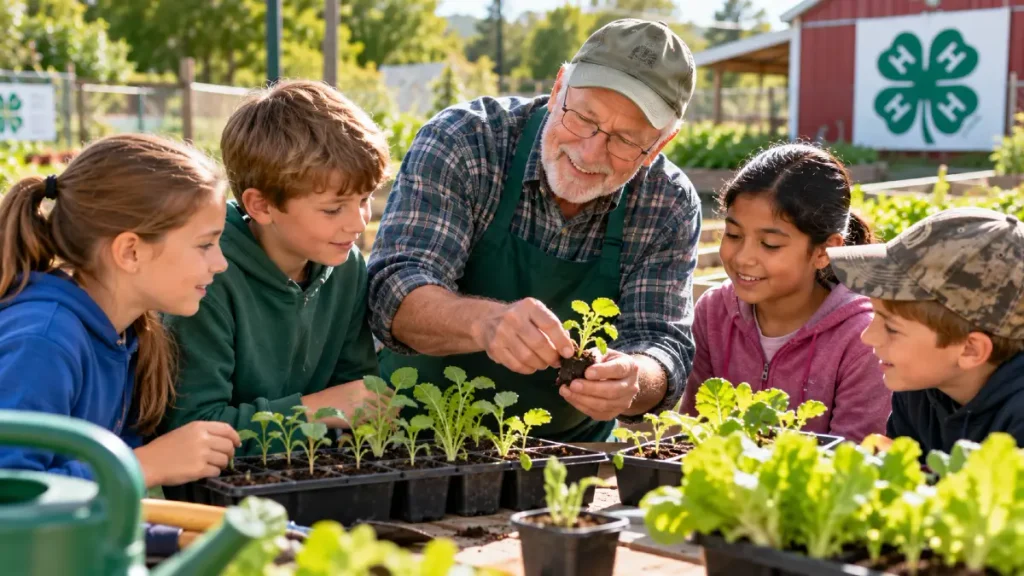
The 4-H youth development program gives young people opportunities to explore science, gardening, animals, leadership, and practical skills.
Retirees can support these activities by helping with workshops, supervising projects, or assisting at community events.
You might share knowledge about growing vegetables, taking photographs, cooking, or building simple projects. You do not need to know everything about a subject to be a helpful volunteer.
Possible responsibilities include:
- Helping children prepare projects for local fairs.
- Supporting gardening or environmental activities.
- Assisting with club meetings and community events.
- Sharing a practical skill during a supervised workshop.
Contact your county Cooperative Extension office to learn about volunteer openings. Screening, orientation, and training are generally required before working with young participants.
8. Mentor Small Business Owners Through SCORE

Retirees with business experience may enjoy helping people who are starting or managing small businesses.
SCORE is a nonprofit organization that provides free business mentoring through experienced volunteers. Mentors can share practical knowledge about planning, customer service, finances, marketing, and daily business operations.
You do not need to have owned a large company. Experience in accounting, sales, management, or another business field may be useful.
SCORE provides onboarding and training, but mentoring usually requires an ongoing time commitment. Volunteers should be comfortable using email and keeping information confidential.
This opportunity works well for retirees who miss solving workplace problems but do not want to return to a regular job.
Compare volunteering with children, adults, and business owners
| Opportunity | Preparation to expect | Best starting point |
|---|---|---|
| School reading volunteer | Screening and school orientation | District volunteer office |
| Adult literacy tutor | Tutor training and materials | Adult education center |
| 4-H club helper | Screening and youth safety training | County Extension office |
| SCORE mentor | Application, interview, onboarding | Local SCORE chapter |
Programs serving children usually have stricter screening requirements. Ask how long approval takes before making plans around a regular volunteer schedule.
9. Help Organize Books at a Public Library
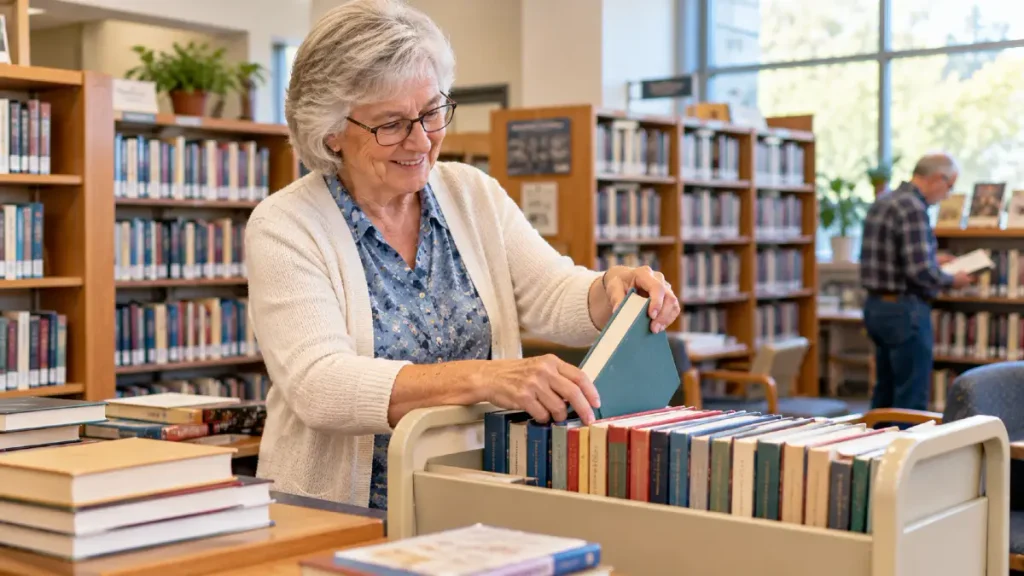
Public libraries are welcoming places for retirees who enjoy books, quiet surroundings, and helping people find information.
Depending on local policies, volunteers may prepare materials for book sales, organize donated books, assist with events, or support reading programs.
Some library systems use paid employees for regular shelving duties, so volunteer responsibilities differ from one location to another.
A library book sale can be an especially good short-term opportunity. You might help sort donations over several mornings or assist customers during a weekend event.
If you enjoy working independently, ask about behind-the-scenes tasks. Retirees who prefer conversation can look for opportunities connected with community programs.
10. Become a Museum or Historical Society Volunteer
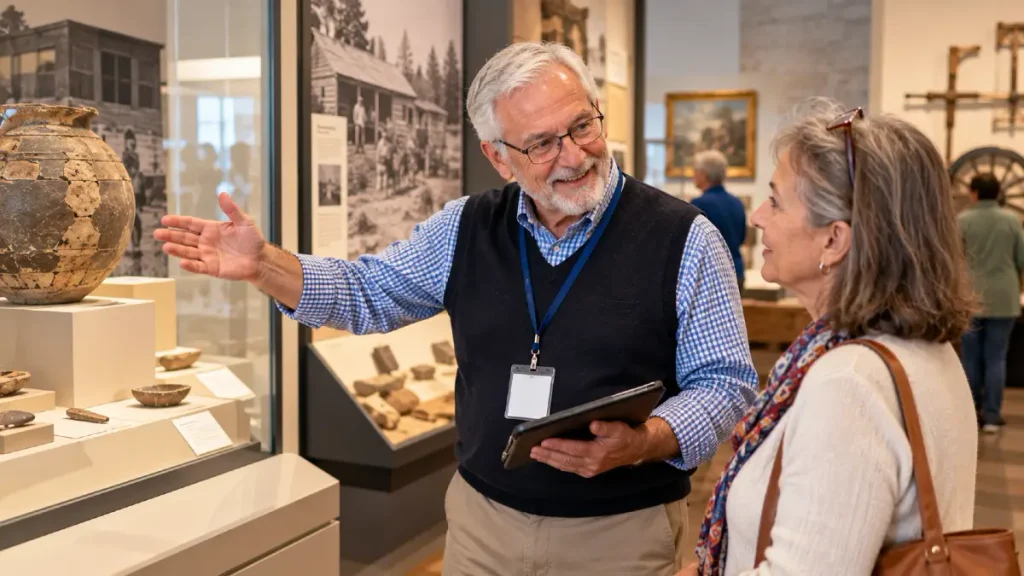
Museums and local historical societies often depend on volunteers to welcome visitors, lead tours, and help preserve community history.
If you enjoy learning about the past, this work gives you a reason to keep exploring new subjects. You may learn about historic buildings, important local events, artwork, or family records.
Visitor-facing roles usually involve some training. Other opportunities may include organizing photographs, preparing exhibits, or helping with special events.
Smaller museums sometimes have limited opening hours, making it easier to volunteer for a few hours each month.
Ask whether the museum has a seated information desk position if walking or standing through long tours would be uncomfortable.
11. Welcome Visitors at a National Park
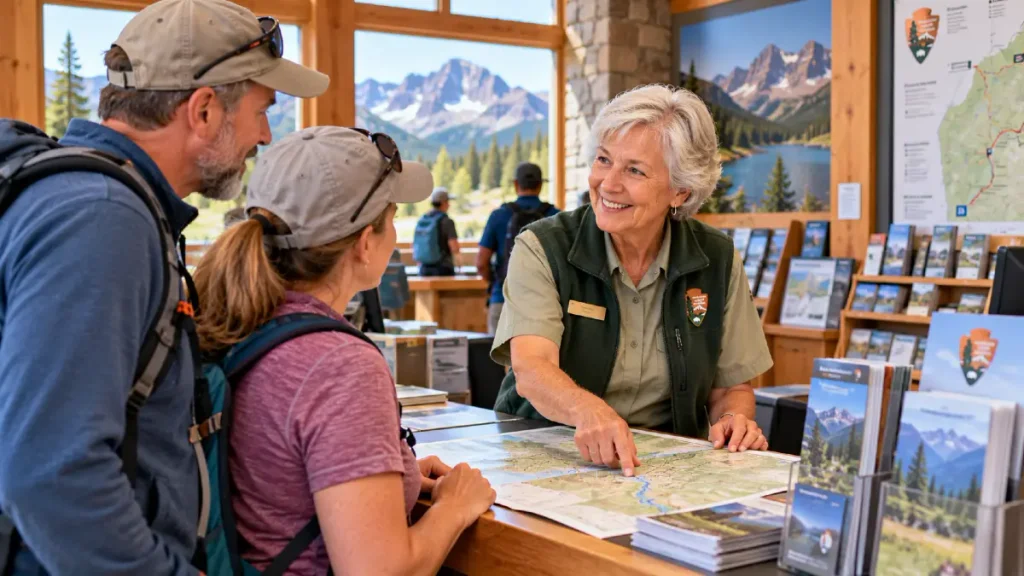
National parks, historic sites, and public recreation areas offer volunteer opportunities beyond physically demanding outdoor work.
Through the National Park Service’s Volunteers-In-Parks program, people may help at visitor centers, answer basic questions, support educational programs, or assist with special events.
This can be a good match for retirees who enjoy nature, travel, and meeting people from different places.
Some assignments are seasonal, while others continue throughout the year. Opportunities can range from a single event to a regular volunteer position.
Search for National Park Service positions through Volunteer.gov or contact a park directly. Ask about accessibility, weather exposure, training, and travel needs before applying.
12. Help at an Animal Shelter or Pet Adoption Event
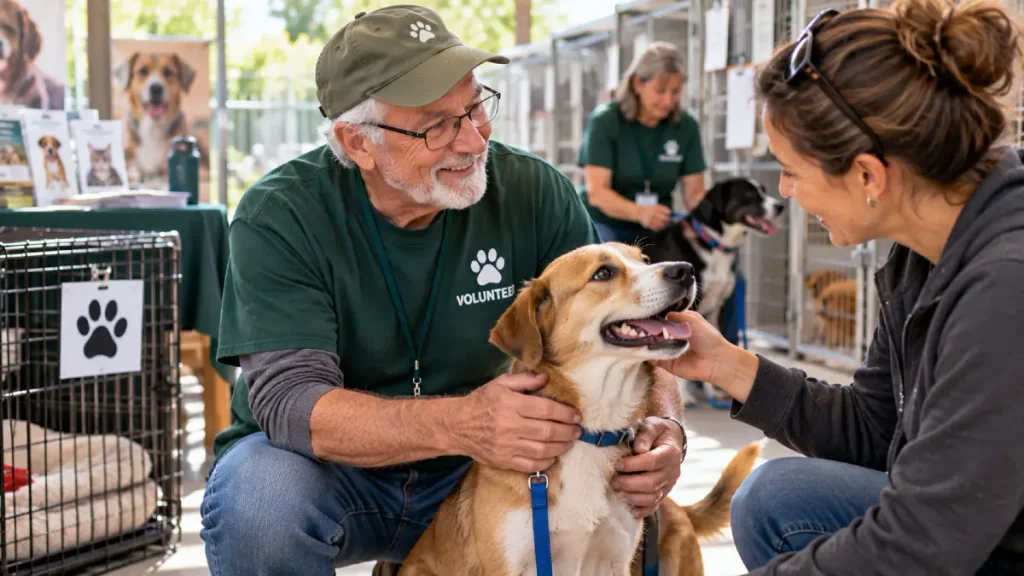
Animal shelters need volunteers for many tasks besides walking dogs or cleaning kennels.
Depending on the shelter, you might welcome visitors, organize supplies, photograph animals, or assist staff during adoption events.
Some roles involve direct contact with animals, while others are administrative. Shelters often provide training and may have specific safety rules.
If you enjoy spending time with animals but prefer lighter duties, ask about reception or adoption-event support.
It is also important to consider noise, allergies, and the emotional side of animal rescue work. Choose a role that matches your comfort level rather than assuming every shelter task will be enjoyable.
Match a volunteer role to your preferred work setting
| Volunteer setting | Indoor or outdoor | Possibility of seated duties |
|---|---|---|
| Public library | Mostly indoor | Often, depending on the role |
| Museum | Mostly indoor | At information desks |
| National park | Both | In some visitor centers |
| Animal shelter | Mostly indoor, sometimes outdoor | In selected support roles |
Accessibility varies by location. Ask about restrooms, seating, transportation, and break times before accepting a position.
13. Become a Senior Companion for Another Older Adult
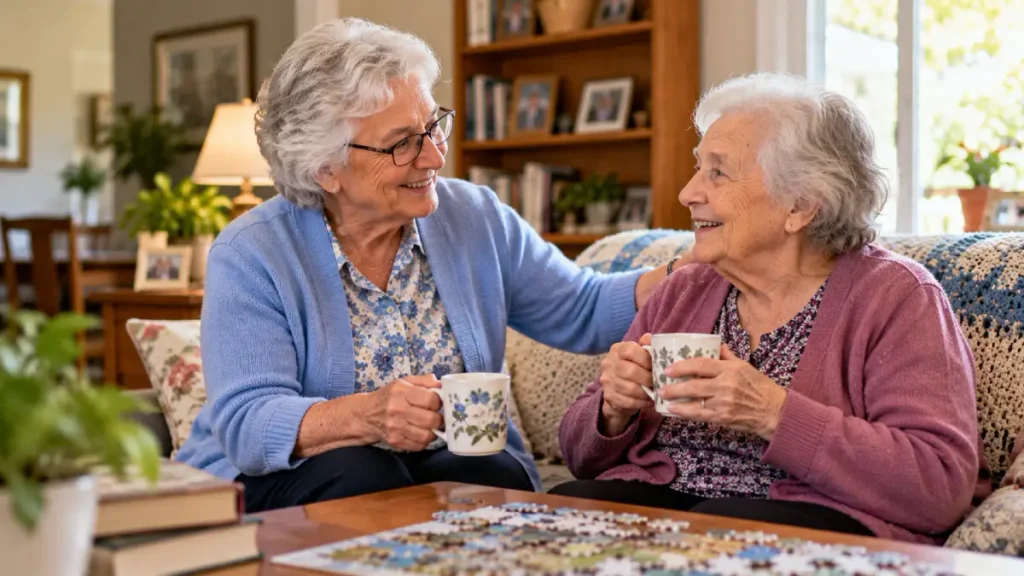
Some retirees find great satisfaction in helping another older person remain connected to the community.
The AmeriCorps Seniors Senior Companion Program connects volunteers with older adults who need companionship or assistance with certain everyday activities.
Depending on the placement, a volunteer might spend time talking, accompany someone on an approved outing, or provide support that gives a family caregiver a short break.
The program is open to eligible volunteers age 55 and older. Some qualifying participants may receive a modest stipend, although eligibility rules apply.
Training and supervision are important parts of this work. Volunteers should follow program rules about transportation, personal information, money, and the kind of assistance they may provide.
14. Make Friendly Phone Calls to People Living Alone
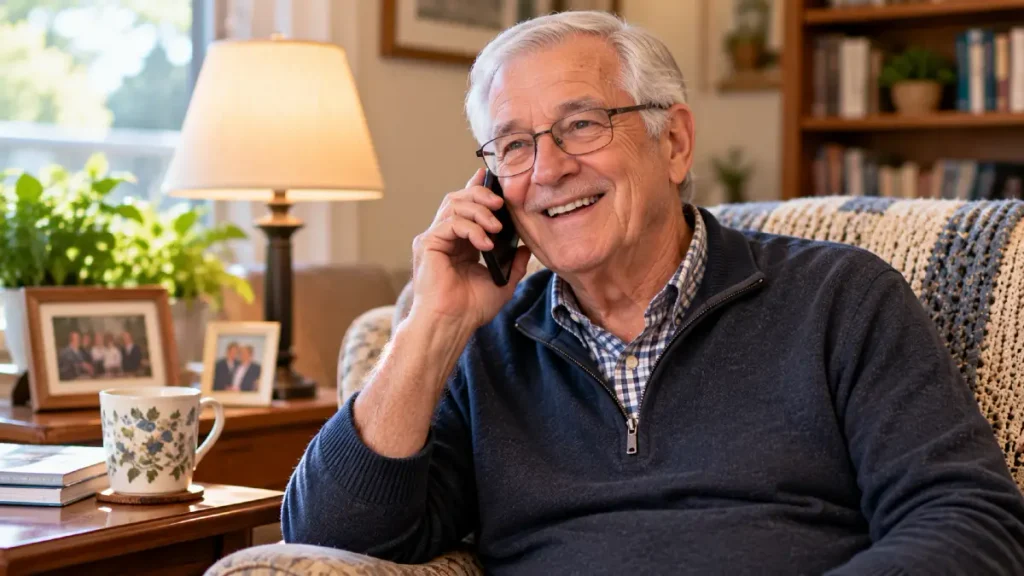
Not every useful volunteer activity requires leaving home.
Some community organizations arrange regular friendly phone calls for people who would enjoy more social contact. Volunteers offer conversation, listen, and help someone feel connected to the wider community.
This may be a practical choice for retirees who no longer drive, live far from volunteer centers, or prefer shorter activities.
You can ask local aging-service organizations, community centers, or senior support programs about supervised telephone outreach opportunities.
A few things matter when choosing a program:
- Calls should follow the organization’s privacy rules.
- Volunteers need guidance about handling concerning situations.
- Conversations should respect each person’s preferences and boundaries.
A friendly calling program can offer a predictable weekly commitment without requiring travel.
15. Offer Companionship Through a Hospice Program

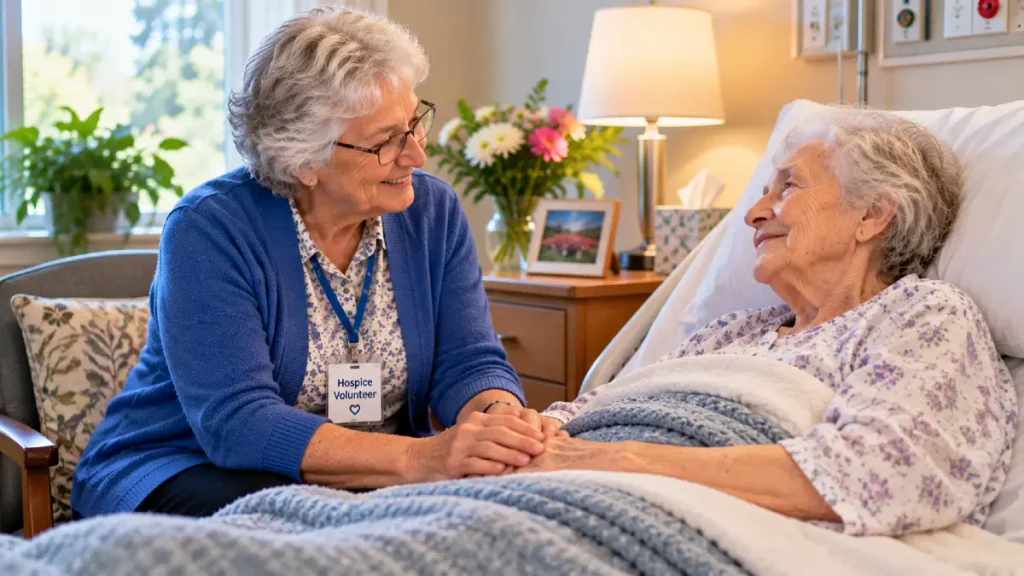
Hospice organizations often welcome volunteers who can provide companionship and nonmedical support to patients and families.
The work may involve sitting with someone, listening to stories, reading aloud, or helping with approved activities. Some volunteers support the hospice office instead of visiting patients.
This role calls for patience, sensitivity, and respect for personal boundaries.
Hospice programs generally require training and background screening. Volunteers who visit patients may also need to meet health requirements.
The Hospice Foundation of America explains that volunteers serve in both patient-facing and administrative roles.
Before applying, consider whether you are comfortable around serious illness and grief. Office support or fundraising may be a better fit if direct companionship feels emotionally demanding.
16. Welcome Patients and Visitors at a Local Hospital
Hospitals can be confusing places for visitors, especially when someone is worried about a family member or trying to find the right department.
Volunteer greeters help people locate waiting rooms, find elevators, and understand where to check in. Some hospitals also use volunteers for information desks, book carts, and other nonclinical tasks.
A calm and welcoming manner can be valuable in this environment.
Hospitals usually require applications, orientation, and health screenings. Some also ask volunteers to commit to a regular shift over several months.
Contact the hospital’s volunteer services department to ask about current openings. Patient care and medical advice must remain with qualified staff.
Important boundaries for people-focused volunteering
| Situation | Safe volunteer approach |
|---|---|
| Someone shares private information | Follow confidentiality policies |
| A person needs medical advice | Refer them to qualified staff |
| A client asks for personal financial help | Follow the program’s approved procedures |
| A situation feels unsafe or upsetting | Contact the volunteer supervisor |
These boundaries protect both the people receiving help and the volunteers supporting them.
17. Work at a Habitat for Humanity ReStore
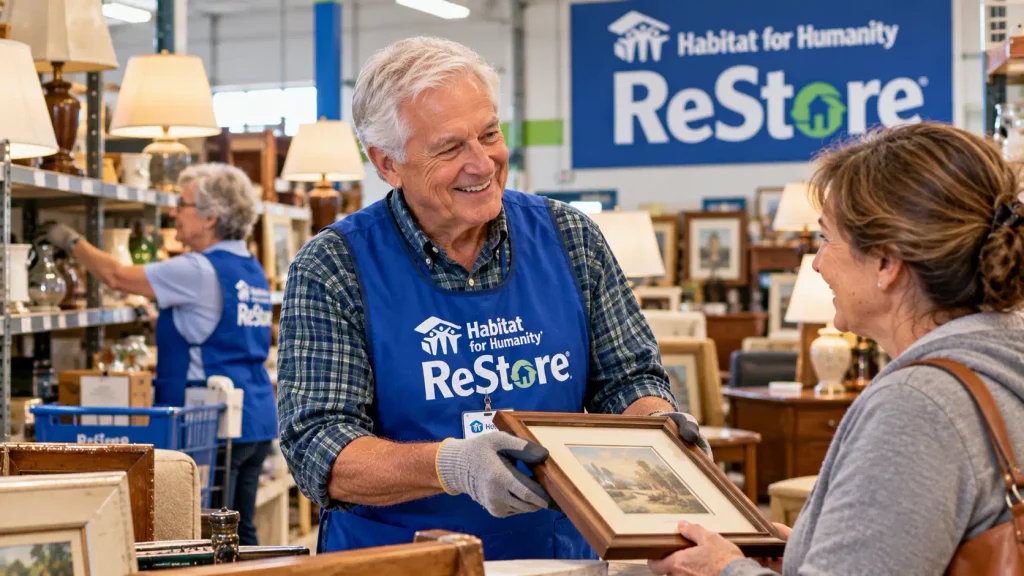
Habitat for Humanity ReStores sell donated furniture, appliances, home improvement items, and building materials to support Habitat’s housing mission.
Volunteers may greet customers, arrange displays, organize merchandise, or help prepare donations for sale.
This work can appeal to retirees who previously enjoyed retail, decorating, repairs, or organizing spaces.
You do not need construction experience for many ReStore positions. However, some tasks involve standing, lifting, or moving bulky items.
Ask the local store manager about lighter responsibilities or shorter shifts before committing.
An indoor retail setting may be a better match than outdoor construction for retirees who prefer a familiar work environment.
18. Help Build Homes With Habitat for Humanity

Retirees who enjoy hands-on projects may prefer working directly on a home-building project.
Habitat for Humanity affiliates organize volunteer construction days where participants work alongside trained supervisors. Tasks may include painting, preparing materials, landscaping, or helping with basic building work.
Many affiliates welcome beginners and provide instruction. Certain activities still require physical strength, balance, and safety equipment.
Construction days can be longer than typical volunteer shifts, so check the schedule before applying.
You can also ask about site preparation or other support duties if you prefer lighter work.
Following safety instructions, using suitable footwear, and choosing manageable tasks are more important than trying to complete the hardest job.
19. Sew Quilts, Blankets, or Clothing for Charity
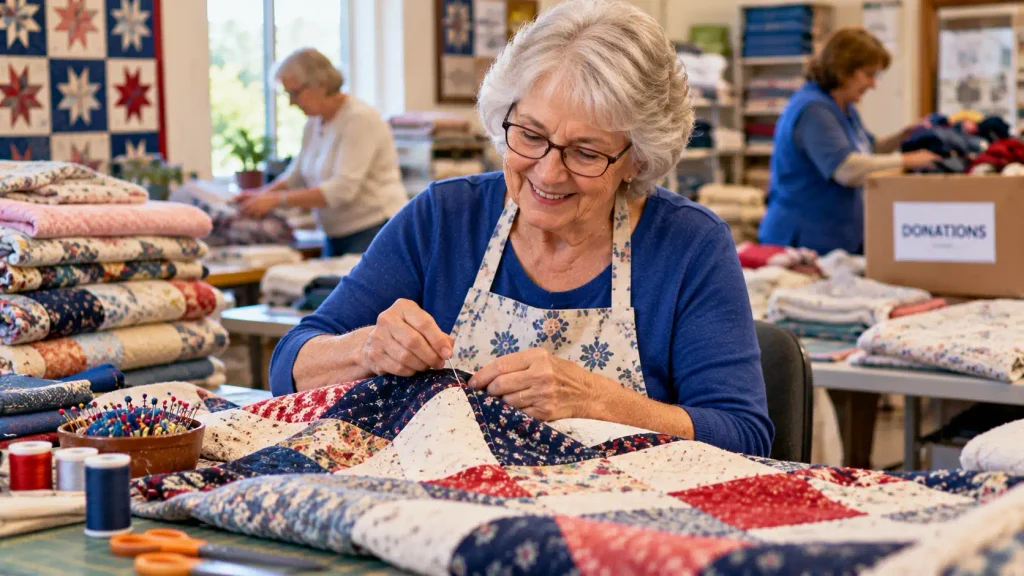
Retirees who enjoy sewing, quilting, or knitting can use those skills to support nonprofit organizations.
Some charities collect handmade blankets, clothing, and other fabric items for people experiencing hardship. Hospitals and care organizations may also accept specific handmade items through approved programs.
This is one of the more flexible volunteer ideas for retirees because much of the work can be completed at home.
You can work on a project during quiet afternoons, bad weather, or whenever your schedule allows.
Before buying fabric or starting a project, contact the organization about:
- Accepted sizes and patterns.
- Fabric and material requirements.
- Cleaning and packaging instructions.
- Delivery or mailing arrangements.
Using donated fabric or working with a local sewing group can help reduce expenses.
20. Make Greeting Cards and Care Packages for People in Need
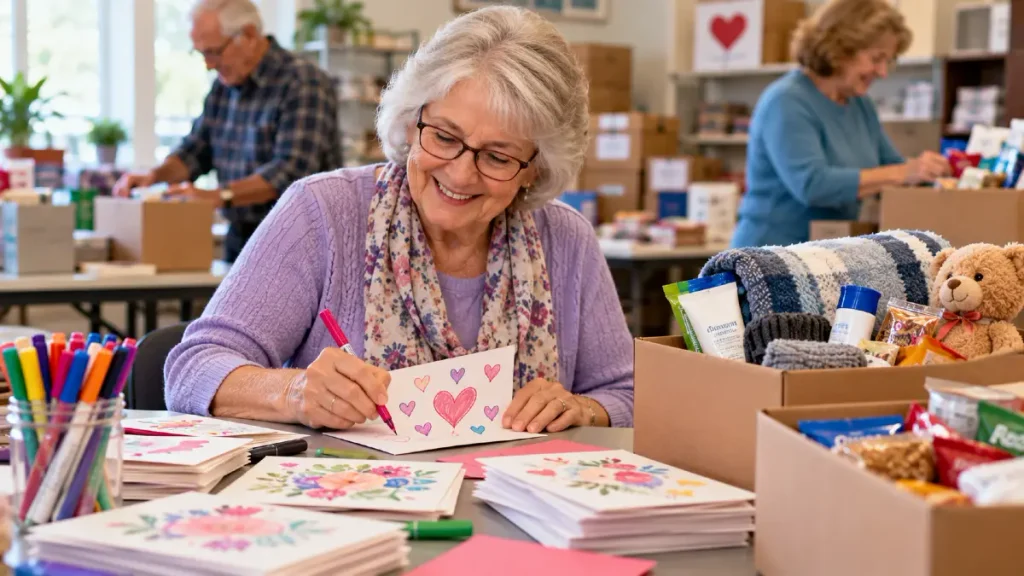
A handwritten card or carefully prepared care package can provide encouragement to someone going through a difficult period.
Community organizations sometimes organize projects for hospital patients, veterans, older adults, and families receiving support.
Retirees can help by writing cards, decorating envelopes, assembling approved supplies, or preparing packages for distribution.
This is a gentle activity that can be completed at a kitchen table. It may also be enjoyable to do with friends, neighbors, or grandchildren.
Check what the receiving organization actually needs before purchasing supplies. Some facilities have strict rules about food, fragrances, personal messages, and donated items.
Supplies and expenses for hands-on volunteer projects
| Project | Supplies to plan for | Possible expense |
|---|---|---|
| ReStore volunteering | Comfortable shoes, suitable clothing | Travel and parking |
| Home construction | Approved work clothes and safety gear | Travel; equipment if not provided |
| Charity sewing | Fabric, thread, needles | Materials and shipping |
| Greeting cards | Paper, pens, envelopes | Stationery and postage |
Many nonprofit organizations provide equipment or donated materials. Checking first can prevent unnecessary spending.
21. Help Organize an American Red Cross Blood Drive
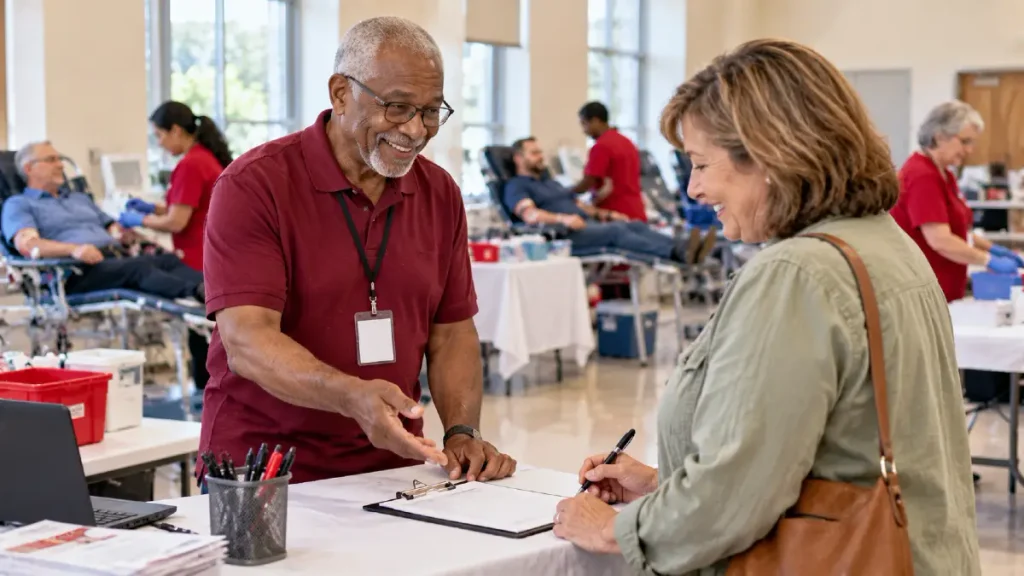
Blood drives need more than blood donors. Volunteers help events run smoothly by greeting visitors, checking people in, answering basic questions, and providing directions.
The American Red Cross offers volunteer positions connected with blood donation events and other community services.
You do not need a medical background to serve as a blood donor ambassador. The organization provides role-specific instructions and training.
This work may suit retirees who enjoy meeting people but prefer not to make a long-term weekly commitment.
Ask about seated registration positions, shift lengths, and any required health or safety procedures. Blood drives are organized at different locations, so opportunities may be available close to home.
22. Join a Community Emergency Preparedness Team
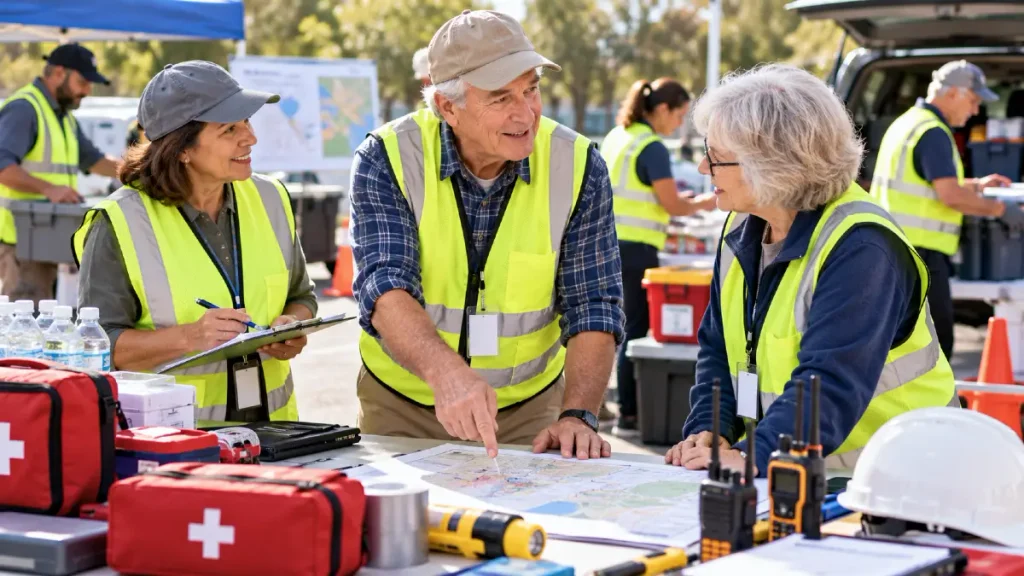
Some retirees enjoy activities that involve planning, teamwork, and practical problem-solving.
Community Emergency Response Team programs, often called CERT, teach volunteers basic disaster preparedness and response skills.
Training may cover emergency organization, fire safety, and ways to support a community during a disaster.
Volunteers with the American Red Cross may also help with preparedness education, communications, and disaster relief support.
Not every role involves responding directly to emergencies. Some organizations need people who can help with paperwork, coordination, or community education.
Ask about training requirements, possible emergency callouts, and the physical demands of the position before enrolling.
23. Participate in Local Park and Neighborhood Cleanups

Neighborhood cleanups are among the easiest short-term volunteer activities to try after retirement.
Community groups often organize events to remove litter, maintain walking paths, clean public gardens, and improve local parks.
Some projects require only an hour or two, making them suitable for retirees who want to contribute without committing to an ongoing schedule.
You may meet neighbors who share an interest in keeping public spaces attractive and welcoming.
Choose a project with tasks that match your abilities. Picking up light litter along an accessible path is different from clearing heavy brush or working on steep trails.
Wear sturdy shoes, follow safety instructions, and avoid handling sharp or unknown materials. Look for cleanups organized by local parks departments or neighborhood associations.
24. Help Scientists Track Birds, Wildlife, or Local Weather
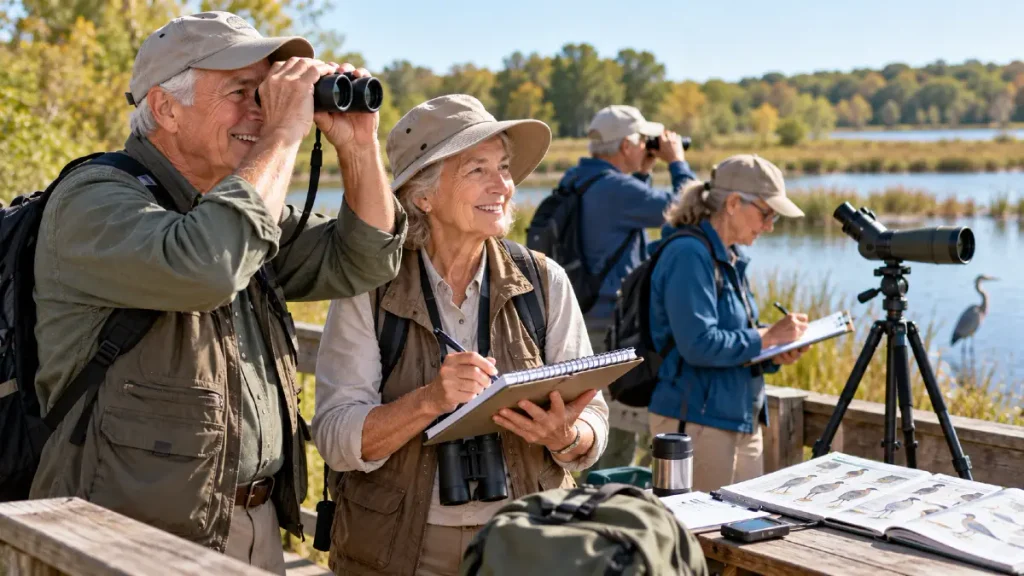
Volunteer science projects allow ordinary people to contribute observations that researchers can use.
The National Oceanic and Atmospheric Administration, or NOAA, supports citizen science activities involving weather, water, and the natural environment.
Some projects involve recording rainfall, identifying wildlife, or reporting observations through a phone or computer.
This can be a good fit for retirees who enjoy nature, photography, science, or spending quiet time outdoors.
You do not always need special equipment or scientific experience. However, certain projects require training, a specific measuring tool, or regular reporting.
Start with a project that matches your interests and local environment.
Choosing a flexible community volunteer schedule
| Volunteer activity | Schedule style | Planning consideration |
|---|---|---|
| Blood drive support | Scheduled event shifts | Check location and shift length |
| Emergency preparedness | Training plus assigned duties | Ask about response expectations |
| Park cleanup | Occasional events | Weather may change plans |
| Citizen science | Project-based or regular observations | Consistency may be required |
If you travel frequently or care for a family member, occasional volunteer events may fit your retirement routine better than a fixed weekly position.
25. Transcribe Historical Documents From Home
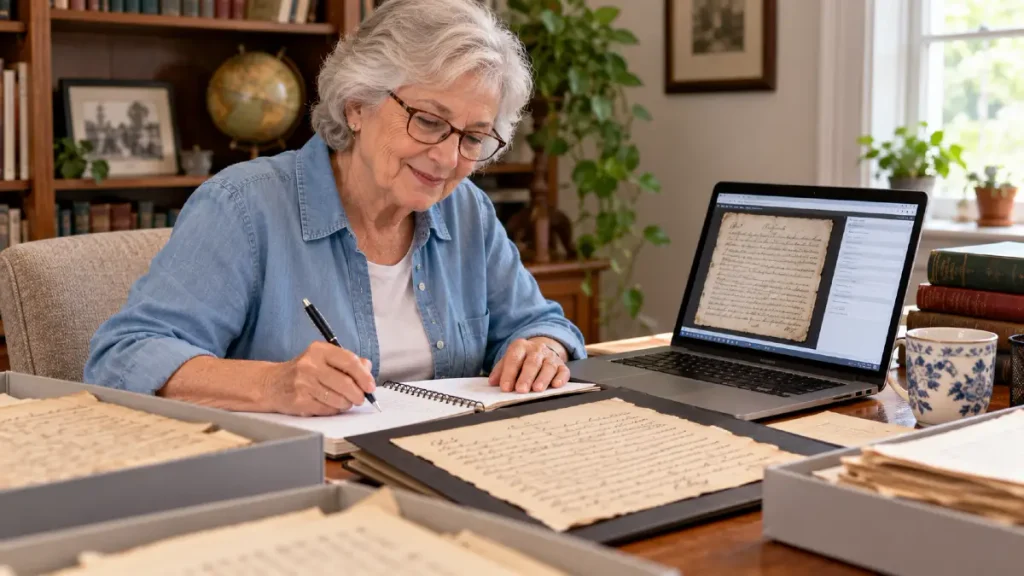
Retirees who enjoy history, reading, and computer activities can help preserve important records without visiting a museum.
The Library of Congress operates a volunteer transcription project called By the People. Participants help turn handwritten and typed historical documents into searchable text.
The Smithsonian Transcription Center also invites digital volunteers to work with materials from its collections.
Another option is the National Archives Citizen Archivist program, where volunteers help transcribe and tag historical records.
These projects can be especially appealing because they allow you to work independently and choose how much time to spend.
A computer, internet connection, and attention to detail are usually enough to begin. Some documents contain difficult handwriting, but beginner instructions and simpler assignments are available.
For retirees who enjoy learning about the past, this offers a useful way to combine personal interest with public service.
Finding a Volunteer Role That Fits Your Retirement
The best volunteer opportunity is not necessarily the busiest or most demanding one. It is the one you can enjoy while still having time for rest, hobbies, family, and other responsibilities.
Some retirees prefer regular face-to-face contact. Others enjoy working independently or contributing from home.
The National Institute on Aging recognizes meaningful activities, including volunteering, as part of staying socially engaged in later life. Still, no single activity guarantees better health or happiness, and volunteering should not become another source of pressure.
Choose one opportunity from this list and contact the organization this week. Ask whether you can begin with a short introductory shift before making a longer commitment.
A small, manageable start can help you discover where your interests and abilities are most useful.
Frequently Asked Questions
Where can retirees find volunteer opportunities near them?
Start with local libraries, community centers, food banks, hospitals, and nonprofit organizations. In the United States, AmeriCorps Seniors RSVP helps people age 55 and older find community volunteer placements. Local volunteer centers can also help match your interests with organizations that need assistance.
Can retirees volunteer from home?
Yes. Retirees can help with historical document transcription, charity sewing projects, organized friendly phone calls, and some nonprofit administrative tasks. The American Red Cross and several cultural institutions also offer remote volunteer positions, although availability varies.
Do retirees need special experience to become volunteers?
Many volunteer opportunities require no previous experience. Organizations usually explain the tasks and provide basic guidance, while positions involving children, patients, finances, or emergency services may require additional training and screening. Your willingness to learn and follow instructions is often more important than your former job title.
How many hours a week should a retiree volunteer?
There is no single ideal number of hours. Some retirees enjoy a regular two-hour weekly shift, while others prefer volunteering once or twice a month. Begin with a schedule that feels comfortable and ask about flexibility, travel costs, and cancellation policies before accepting a longer commitment.