


A $500,000 house can look surprisingly ordinary in 2026, but its monthly cost is anything but ordinary. At current mortgage rates, the gap between being approved for that house and comfortably affording it can amount to tens of thousands of dollars in household income.
That difference matters because the mortgage is only the beginning. Once taxes, insurance, PMI, maintenance and cash reserves enter the calculation, a household that looks wealthy on paper can suddenly find itself spending an uncomfortable share of every paycheck just to keep the house.
The $500,000 Price Tag Is Only the Beginning

Start with the number that controls almost everything else: the mortgage rate. Freddie Mac reported an average 6.71% rate for a 30-year fixed mortgage as of September 3, 2026, although an individual buyer’s rate can be higher or lower based on credit, points, loan type and other factors.
Consider a hypothetical buyer putting 10% down. That means $50,000 in cash toward the price and a $450,000 mortgage.
At 6.71% for 30 years, principal and interest alone work out to roughly $2,907 per month. Hold that loan for the full 360 payments without refinancing or making extra principal payments, and roughly $596,000 of interest would be paid on top of the $450,000 borrowed.
That is before a dollar of property tax, homeowners insurance or maintenance.
The following model will be used throughout the article. Property taxes and insurance vary enormously by location, so those two figures are deliberately labeled as illustrative assumptions rather than national promises.
| Financial Metric | Base-Case Figure | Why It Matters |
|---|---|---|
| Home price | $500,000 | Purchase target |
| Down payment | 10%, or $50,000 | Reduces mortgage to $450,000 |
| Mortgage rate | 6.71% | Freddie Mac average, Sept. 3, 2026 |
| Principal + interest | About $2,907/mo. | Mortgage only |
| Illustrative property tax | $458/mo. | Assumes 1.1% annually |
| Illustrative insurance | $250/mo. | Must be replaced with a local quote |
| Illustrative PMI | $188/mo. | Assumes 0.5% annually on loan |
| Maintenance reserve | $417/mo. | Assumes 1% of home value annually |
| Modeled ownership cost | About $4,219/mo. | Before HOA and utilities |
The number worth remembering is not $2,907. Under these assumptions, it is closer to $4,200 per month, and an HOA, higher insurance premium, higher local property taxes or an older house could push it higher.
The CFPB specifically warns buyers that the amount they qualify to borrow is different from the amount they can comfortably afford. It also tells buyers to consider taxes, insurance and mortgage insurance rather than focusing only on principal and interest.
The Brutal Math on a $500K House in 2026

The down payment makes a much larger difference than the headline price suggests. Putting $100,000 down does not simply reduce the cash required later; it cuts the loan by $50,000 compared with 10% down and usually removes conventional PMI.
For the next comparison, the mortgage rate remains 6.71%. Property tax stays at an illustrative 1.1%, insurance at $250 monthly, maintenance at 1% annually, and PMI below 20% down is modeled at 0.5% annually, which sits within Fannie Mae’s much broader typical PMI range of roughly 0.2% to 2%.
| Down Payment | Mortgage | P&I Payment | Modeled Monthly Ownership Cost |
|---|---|---|---|
| 5% ($25,000) | $475,000 | $3,068 | $4,391 |
| 10% ($50,000) | $450,000 | $2,907 | $4,219 |
| 20% ($100,000) | $400,000 | $2,584 | $3,709 |
| 25% ($125,000) | $375,000 | $2,422 | $3,547 |
These are budgeting scenarios, not loan quotes. They exclude utilities and HOA charges, and actual PMI, taxes and insurance could change the total substantially.
Still, the pattern is hard to miss. Going from 10% to 20% down cuts this model by about $510 a month, but reaching that payment requires finding another $50,000 upfront.
The Median Household Income Does Not Come Close Under These Assumptions
The latest annual Census CPS income report currently available puts U.S. median household income at $83,730 in 2024. The 2025 income report is scheduled for September 15, 2026, so using an unverified 2025 national median today would create false precision.
At $83,730, gross household income is about $6,978 per month. The $4,219 ownership budget from the 10%-down scenario would consume roughly 60% of gross income, before federal and state income taxes, payroll taxes, groceries, cars, childcare, healthcare or retirement saving.
Even a buyer somehow arriving with $100,000 for a 20% down payment would face roughly $3,709 of modeled monthly ownership costs. That equals about 53% of the median household’s gross income.
That does not mean every household below a certain number is prohibited from buying. It means the national median income and a $500,000 purchase are badly mismatched under today’s rate environment without a very large down payment or other favorable circumstances.
Who Can Actually Afford a $500K House in 2026?
One common housing-affordability line is 30% of income. Census material notes that many government agencies treat housing costs above 30% of income as excessive or cost burdened, although the definition is a measure of housing burden rather than a personalized homebuying commandment.
Using the 10%-down example and its $4,219 monthly modeled ownership cost, the household would need roughly $169,000 a year for that cost to equal 30% of gross income. At $200,000, the ratio falls closer to 25%.
Here is what the same house looks like as income changes.
| Household Income | Gross Monthly Income | $4,219 as % of Gross | Practical Reading |
|---|---|---|---|
| $100,000 | $8,333 | 50.6% | Extremely tight for most budgets |
| $125,000 | $10,417 | 40.5% | Still heavily housing-dependent |
| $150,000 | $12,500 | 33.8% | Possible, but other debts matter greatly |
| $170,000 | $14,167 | 29.8% | Begins to fit a 30% planning screen |
| $200,000 | $16,667 | 25.3% | More room for other priorities |
This produces a more defensible answer to the headline.
With 20% down and favorable local costs, a $500,000 home may start looking workable around the upper-$140,000s to $150,000 range. With 10% down under the assumptions above, roughly $170,000 is a stronger starting point.
That is not the finish line. A household paying $2,500 a month for childcare, carrying large student loans, supporting relatives or living somewhere with expensive property insurance may need considerably more.
A debt-free couple with no children, low local taxes, strong emergency savings and a larger down payment could reasonably reach a different conclusion.
Why a Bank May Approve a Payment That Still Feels Miserable

This is one of the most important distinctions in the entire housing conversation. Mortgage approval answers the lender’s question, not the household’s question.
Fannie Mae’s current Selling Guide says manually underwritten loans generally have a maximum total debt-to-income ratio of 36%, potentially reaching 45% when certain credit-score and reserve requirements are met. Casefiles processed through Fannie Mae’s Desktop Underwriter can have a maximum allowable DTI of 50%.
DTI means debt-to-income ratio. It compares qualifying monthly debt obligations with gross monthly income before taxes.
A household could therefore pass an underwriting system at a debt level that leaves far less room than it personally wants for retirement saving, travel, childcare, medical expenses, helping parents or simply having cash left over every month.
The CFPB makes the same distinction plainly: lenders determine how much they are willing to lend, while buyers need to consider their own income, expenses and priorities to determine what they can afford.
An approval letter should therefore be treated as a ceiling created for a lending decision, not a spending target.
The $100,000 Down Payment Is Not the Whole Cash Requirement
A buyer putting 20% down needs $100,000, but that is not necessarily the amount needed to reach the closing table. The CFPB says closing costs typically run about 2% to 5% of purchase price, excluding the down payment.
On a $500,000 transaction, that rough range is $10,000 to $25,000. Some costs can be negotiated, structured differently or offset with credits, but pretending they do not exist makes an affordability calculation look much healthier than reality.
A 20%-down buyer could therefore need roughly $110,000 to $125,000 between the down payment and an illustrative closing-cost range. That still does not include moving expenses, immediate repairs or the emergency reserve that ideally remains untouched after closing.
The CFPB recommends considering an emergency cushion of roughly three to six months of expenses when deciding how much available savings can safely go toward a home purchase.
That creates a crucial distinction: having $100,000 is not the same as having $100,000 available for a down payment.
Maintenance Is the Expense Mortgage Calculators Keep Quiet
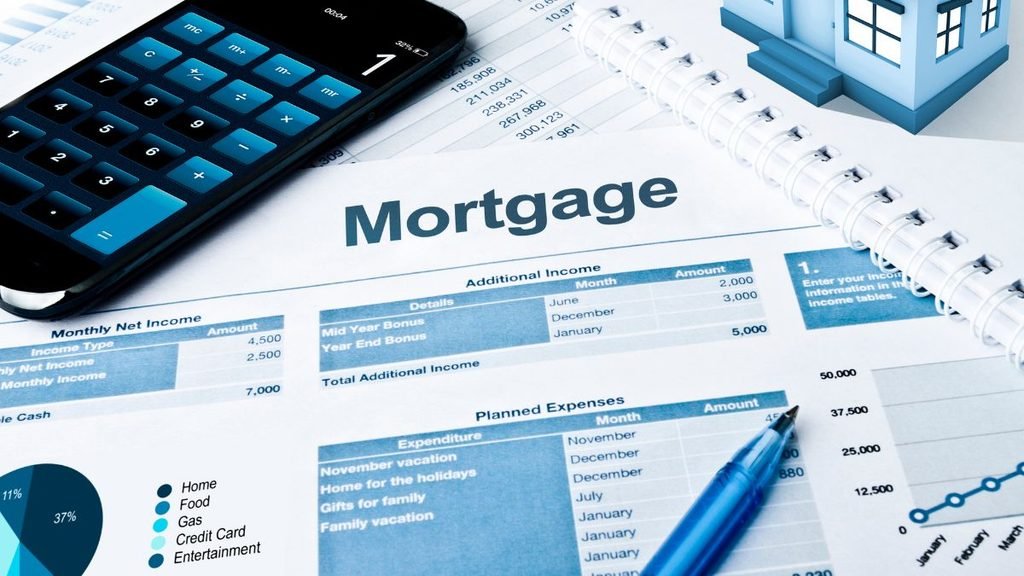
The roof does not care about your debt-to-income ratio. Neither does the water heater, HVAC system, leaking pipe or refrigerator.
Fannie Mae suggests a broad rule of thumb of saving about 1% to 4% of a home’s value per year for maintenance and repairs, with newer homes potentially nearer the lower end and older homes potentially requiring more.
Using only the low end on a $500,000 property means setting aside $5,000 per year, or about $417 per month.
That money may not leave the checking account every month. One month could cost almost nothing, while another brings a $3,000 repair.
That irregular timing is precisely why buyers underestimate maintenance. A $417 monthly reserve feels optional until two large repairs arrive in the same year.
The Federal Reserve’s 2025 household survey helps explain why this matters. Only 55% of adults reported having three months of expenses set aside in a rainy-day fund, while major house or appliance repairs were among the commonly reported large unexpected expenses.
A buyer who empties almost every liquid dollar into closing may technically own more house while becoming less financially resilient.
Existing Debt Can Change the Answer by Tens of Thousands of Dollars
Suppose two households each earn $160,000. Both are considering exactly the same $500,000 property, yet one has no consumer debt while the other has $700 in car and student-loan payments every month.
Their salary is identical, but their financial capacity is not.
At $160,000, gross monthly income is about $13,333. The base $4,219 ownership budget consumes approximately 31.6% of gross income before the second household even sends its $700 to creditors.
Now add childcare or an HOA fee and the same salary produces a completely different lifestyle.
This is why statements such as “you need $150,000 to afford a $500K house” are incomplete. The useful question is what is already competing for that income before the mortgage arrives?
Debt also changes lender qualification. More importantly for the household, recurring debt removes exactly the money that would otherwise absorb repairs, build savings or make a tight month survivable.
The Behavioral Trap Behind “Everyone Else Is Buying”
Housing combines money with identity, which makes the decision unusually vulnerable to social comparison. Buyers rarely know whether the friend purchasing a $600,000 house received a family gift, earns twice as much, sold another property with large equity or is carrying a budget that feels terrible behind closed doors.
Anchoring creates another problem. Once a lender says “approved up to $525,000,” $500,000 begins to feel conservative even when the buyer originally planned to spend $400,000.
The number has changed, but the household’s childcare bill, retirement goal and tolerance for financial stress have not.
Loss aversion can finish the job. After weeks of shopping, inspections and rejected offers, walking away from the “perfect” property feels like losing something already owned.
That is why the best affordability calculation should happen before the emotionally appealing listing appears.
Five Housing Affordability Myths Worth Dropping
Several beliefs survive because each contains a small piece of truth. The problem appears when that partial truth becomes a buying rule.
The better approach is to separate what helps someone obtain a mortgage from what helps someone live comfortably after getting one.
| Common Belief | Reality | Better Way to Think About It |
|---|---|---|
| “The bank approved it, so it is affordable.” | Approval measures lending risk under underwriting rules. | Build a household budget independently. |
| “You must put 20% down.” | Lower-down-payment options exist, but PMI or other costs may apply. | Compare total cost and remaining savings. |
| “Renting is always throwing money away.” | Owning also has interest, taxes, insurance, repairs and transaction costs. | Compare the complete alternatives. |
| “A higher salary fixes everything.” | Debt, childcare and lifestyle costs can absorb the raise. | Measure monthly margin, not salary alone. |
| “Maintenance averages out.” | Costs arrive irregularly and can be large. | Fund repairs before they become emergencies. |
The biggest myth is that there must be one correct income number. There is not.
A useful affordability range can be calculated, but the answer moves with the down payment, rate, location, debts and the buyer’s need for financial breathing room.
What Would Make a $500K House Safer to Buy?

A household does not necessarily need to abandon the $500,000 target. Several variables can materially change the calculation.
A larger down payment lowers both the loan balance and principal-and-interest payment. Reaching 20% down on a conventional mortgage also generally avoids the PMI normally required below that level.
Lower recurring debt can matter almost as much. Eliminating a $600 car payment creates $600 of monthly breathing room without requiring the house price to move at all.
A lower mortgage rate would also change the equation dramatically. A $450,000 mortgage at 6.71% costs roughly $2,907 in monthly principal and interest; even relatively small rate movements matter when spread across hundreds of thousands of borrowed dollars.
Location matters as well. A home with low property taxes, moderate insurance costs and no HOA may carry hundreds of dollars less per month than another $500,000 property with the same mortgage.
Finally, income stability matters in a way ratios cannot capture. Two people earning the same amount may reasonably choose different house budgets if one has a volatile commission-based income while the other has highly predictable earnings and substantial reserves.
A Five-Step Test Before Making an Offer
An online mortgage calculator is useful, but it should be the beginning rather than the end of the calculation. Before making an offer, replace generic estimates with numbers attached to the actual property whenever possible.
The following checklist turns affordability from a vague feeling into a decision that can be tested.
| Priority | What to Check | What to Do Next |
|---|---|---|
| 1 | Real mortgage quote | Price several lenders and compare Loan Estimates |
| 2 | Taxes, insurance, HOA | Use the actual address and current local figures |
| 3 | Cash after closing | Keep closing costs, moving costs and reserves separate |
| 4 | Monthly margin | Add debts, childcare, transportation, food and savings goals |
| 5 | Stress test | Ask whether the budget survives a repair or temporary income drop |
The most revealing number may be the amount left after everything else. If purchasing the house requires stopping retirement contributions, carrying repairs on credit cards or relying on future raises that have not happened, the price may technically fit while the life around it does not.
Conversely, a household with strong savings, low fixed obligations and meaningful monthly surplus may be comfortable with a payment that would be completely unreasonable for another household earning exactly the same amount.
That is why affordability cannot be reduced to salary alone.