

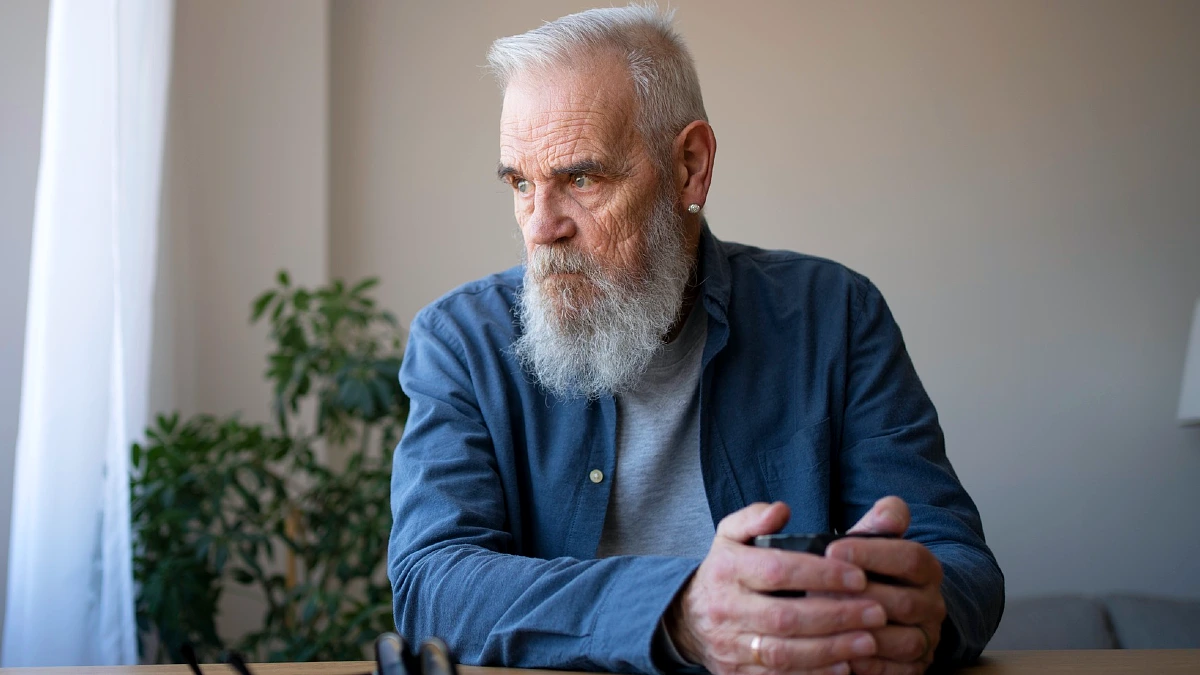
A man in his 60s stops returning calls, skips gatherings, and lets old friendships fade. It is tempting to call that bitterness, depression, or “protecting his peace,” but each label can miss what is happening. The real psychology behind why senior men over 60 cut people off is more complicated.
Some men are pruning low value ties and protecting time. Others are dealing with retirement, bereavement, hearing loss, conflict, poor health, or loneliness they may not name.
The key is not how many people remain, but whether the smaller circle still gives him choice, support, and meaningful connection.
The Biggest Mistake Is Assuming Withdrawal Has One Meaning

Here is the first important payoff: having fewer people in your life is not automatically the same as being lonely.
The National Institute on Aging defines loneliness as the distressing feeling of being alone or separated, while social isolation refers to having few contacts or people to interact with regularly. A person can live alone and feel content, or spend every day around people and still feel deeply lonely.
That distinction changes how we should look at an older man who turns down invitations. The question is not simply, “How many people does he see?” It is also, “Did he choose this, does he like his current life, and does he still have reliable people available when he wants or needs them?”
| What you see | What it may mean | Question that matters |
|---|---|---|
| He enjoys several quiet days alone | Chosen solitude | Does he still enjoy his normal activities? |
| He sees fewer acquaintances but keeps close friends | Social selectivity | Are his important relationships still intact? |
| He avoids one particular person | Boundary or unresolved conflict | Is the withdrawal targeted or happening everywhere? |
| He wants company but has trouble reaching people | Social isolation | Are transportation, health, hearing, or mobility getting in the way? |
| He has stopped engaging with almost everyone | Several possibilities | Is this a sudden change, and is he distressed by it? |
A small circle can therefore be perfectly compatible with a satisfying life. What deserves closer attention is loss of choice, especially when a man wants connection but health, circumstances, grief, fear, or strained relationships keep him from it.
Why Senior Men Over 60 Cut People Off: What Psychology Actually Supports
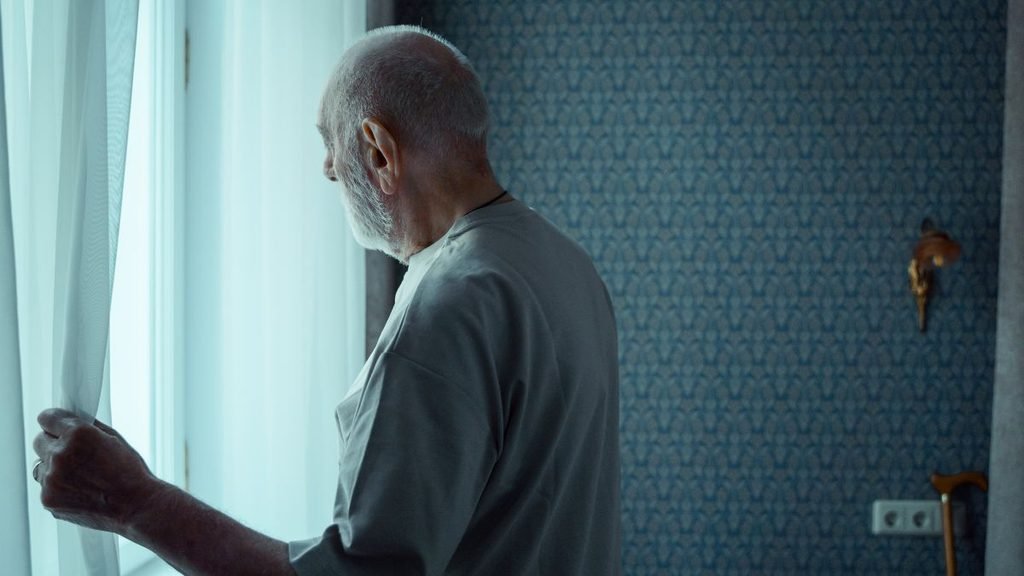
One of the strongest explanations comes from psychologist Laura Carstensen’s socioemotional selectivity theory. The theory proposes that when people perceive their future time as more limited, they tend to place greater value on emotionally meaningful experiences and relationships rather than constantly expanding their social world.
This is more subtle than “men turn 60 and stop tolerating people.” The research indicates that perceived time horizon matters more than a particular birthday, and similar shifts can occur when younger people face circumstances that make time feel limited.
Longitudinal Stanford-linked research provides another useful detail. Social networks tended to become smaller across later adulthood largely through reductions in peripheral partners, while the number of close social partners was relatively stable.
People were not necessarily abandoning intimacy; they were becoming more selective about where they placed it.
That gives us at least six plausible explanations for what looks from the outside like “cutting people off.”
| Possible reason | What may be happening | What should not be assumed |
|---|---|---|
| Greater selectivity | Peripheral relationships feel less worthwhile | He hates people |
| Boundary setting | A repeatedly stressful relationship is being limited | Every cutoff is psychologically healthy |
| Retirement or lifestyle change | Routine contact disappears or changes | Retirement automatically causes loneliness |
| Bereavement or separation | A key relationship and shared social network may be gone | He deliberately chose isolation |
| Health or sensory barriers | Conversation and outings require more effort | He has lost interest in everyone |
| Loneliness or depression | Withdrawal may be unwanted or part of distress | Solitude always means peace |
The useful idea behind the popular “protecting his peace” explanation is therefore real, but incomplete. Selectivity exists alongside involuntary losses and barriers, and two men displaying exactly the same behavior may need completely different responses.
A Smaller Circle Can Be Healthy

Many adults spend decades accumulating social obligations. There are co-workers, neighbors, parents from children’s activities, distant relatives, professional contacts, clubs, old classmates, and friendships that continue mainly because they have always continued.
Later in life, some of those connections naturally disappear while others become more important. Socioemotional selectivity research suggests this narrowing can improve the emotional quality of everyday experience when peripheral relationships fall away while emotionally meaningful ones remain.
Conflict research adds another piece. Studies have found that older adults often use disengagement or conflict-avoidance strategies more than younger adults and can experience less emotional reactivity when they avoid an argument.
That can make declining an invitation, ending an argument, or stepping away from a consistently unpleasant interaction feel more sensible than trying to win every dispute.
That does not mean avoidance is always the best answer. Other research involving adults 65+ found interpersonal tensions were associated with poorer emotional well-being and that a general preference for avoidance could sometimes worsen those effects, showing why “just cut people off” is too simple as psychological advice.
Retirement Changes the Social Structure, Not Necessarily the Need for People

Work provides more than a paycheck. For many people it also creates repeated contact, familiar faces, shared problems, routines, casual conversations, and reasons to leave home at roughly the same time each day.
When employment ends, some of those contacts may vanish without anyone consciously ending a friendship. A man who used to talk with six co-workers every weekday may discover that only one of those relationships existed strongly enough outside the workplace to continue.
Yet retirement should not be described as an automatic loneliness trigger.
A 2025 longitudinal analysis using English Longitudinal Study of Ageing data found no short-term or long-term increase in loneliness among newly retired adults compared with those still working; newly retired participants actually had lower short-term odds of social isolation in that study.
The more useful question is what replaces the structure work once provided.
A retiree with hobbies, family relationships, neighborhood routines, volunteering, faith involvement, or regular friendships may gain social freedom, while someone whose relationships existed almost entirely through work can face a much bigger adjustment.
Some Men Lose Connections Without Choosing to

What appears to be social rejection may sometimes be a practical problem. NIA lists mobility loss, hearing or vision problems, financial struggles, lack of transportation, retirement, bereavement, caregiving, separation from family, and poor social support among factors that can increase the risk of isolation and loneliness.
Hearing deserves particular attention because it is easy to misread. NIA notes that older adults who have difficulty hearing may withdraw because conversations become frustrating or embarrassing, and others can mistakenly interpret hearing difficulty as confusion or unresponsiveness.
| Behavior family notices | One possible explanation | A better question |
|---|---|---|
| Stops going to restaurants | Noise makes conversation difficult | “Are quieter places easier?” |
| Rarely visits distant friends | Driving or transportation has become difficult | “Would another way of getting there help?” |
| Leaves gatherings early | Fatigue, pain, hearing strain, or preference | “Was something making the visit uncomfortable?” |
| Stops seeing work friends | Shared routine ended after retirement | “Is there anyone from work you actually miss?” |
| Declines family events | Conflict, overstimulation, grief, or practical barriers | “Is there a different way you’d rather get together?” |
| Does not answer calls | Preference, hearing, technology, mood, or strained relationship | “Would you rather I text first?” |
These questions preserve the man’s control over his life instead of assuming he needs to be “fixed.” They also make room for something surprisingly ordinary, such as poor acoustics or an exhausting drive, to explain behavior that relatives had interpreted as emotional rejection.
Why Some Older Men Do Not Say “I’m Lonely”
Research specifically involving older men adds an important complication. In a qualitative study of 72 men ages 65 to 95 living alone in England, participants described loneliness following events including bereavement, divorce or separation, illness, and loss of workplace relationships after retirement.
Researchers also found that expectations surrounding masculinity could complicate talking about loneliness and asking for help.
A separate 2024 study using English Longitudinal Study of Ageing data found a complicated relationship between sex, marital history, friendship quality, isolation, and reported loneliness.
The researchers suggested that some older men’s reluctance to report loneliness and poorer friendship quality might help explain parts of the pattern.
These studies are British, so they should not be treated as exact measurements of American men over 60. Still, they challenge the assumption that a man who says, “I’m fine by myself,” can automatically be classified either as secretly miserable or completely content.
Current U.S. research points to similar reasons for taking friendship seriously. AARP’s 2025 nationally representative friendship survey of 1,488 U.S. adults found 95% regarded friends as essential to a happy and healthy life, while AARP’s separate research has reported higher loneliness among men than women in its 45-plus population.
Those age ranges extend below 60, so they cannot be used as a statistic specifically for senior men.
Conflict Can Become Less Worth the Emotional Cost

There is another reason someone may stop pursuing a relationship: the relationship has become a reliable source of stress. Social ties can provide companionship and practical help, but research on later-life relationships also recognizes that they can bring conflict, criticism, disappointment, and interference with personal goals.
Consider a hypothetical 68-year-old man who has met the same friend every Saturday for 20 years. During the last few years, every meeting has turned into criticism, arguments, or requests he does not want to meet.
Reducing those meetings would not prove that he has become antisocial. He might simply have decided that history alone is no longer enough reason to continue a relationship in its old form.
Yet there is a big difference between setting a boundary with one chronically stressful person and progressively disconnecting from almost everyone.
The second pattern deserves more curiosity, especially if it is new or accompanied by loss of interest, hopelessness, major changes in sleep or appetite, increased alcohol use, or difficulty handling normal daily life.
How to Tell Peaceful Solitude From Troubling Withdrawal
No table can diagnose depression or determine whether someone’s social life is healthy. It can, however, help families ask better questions before labeling the behavior.
NIA emphasizes that depression is not a normal part of aging and identifies social isolation and loneliness among factors associated with depression risk. Major life events, medical problems, sleep problems, caregiver stress, and functional limitations can also matter.
| More consistent with chosen solitude | Worth checking more closely |
|---|---|
| He enjoys the time alone | He says he feels trapped, unwanted, or abandoned |
| A few meaningful relationships remain | Almost every relationship has disappeared |
| He still pursues interests and routines | Activities he once enjoyed have largely stopped |
| He turns down some invitations but accepts others | He rejects nearly every form of contact |
| The pattern developed gradually and makes sense to him | There has been a sudden major personality or behavior change |
| He can ask for help when needed | He has become unreachable during periods of obvious difficulty |
| He describes the smaller circle as satisfying | He describes hopelessness or having no reason to live |
One column is not “good” and the other a diagnosis. The real distinction is whether withdrawal remains chosen, flexible, satisfying, and compatible with everyday functioning, or whether it increasingly seems driven by distress, loss, or barriers the person cannot solve alone.
There is also a serious reason not to romanticize every form of withdrawal among older men. Final U.S. mortality data for 2024 show that males age 75 and older had the highest suicide rate among the male age groups reported by CDC, at 40.1 deaths per 100,000; men ages 65 to 74 had a rate of 26.2 per 100,000.
That statistic does not mean a man who enjoys solitude is suicidal. It means statements about hopelessness, having no reason to live, or self-harm should never be reframed as merely an older man choosing peace; NIA advises seeking immediate help in those circumstances, including calling or texting 988 in the United States.
What Family and Friends Can Do Without Pushing

A common mistake is turning concern into interrogation. “Why don’t you call anyone anymore?” or “You need to get out more” can make an independent adult feel as if other people have already decided what his life should look like.
Try curiosity instead of correction. Asking, “Are you enjoying having more time to yourself?” gives him room to say yes, while “Is there anyone you miss seeing but haven’t been able to connect with?” creates an opening if the isolation was not entirely chosen.
Specific invitations also work better than vague pressure. “Do you want to come over sometime?” requires planning and another decision, while “I’m getting lunch Thursday at noon. Want to join me?” is easy to accept or decline without a long conversation.
Shared activities can matter too. Research on older men’s friendships suggests connection often develops through activities and common interests as well as direct emotional conversation, although men vary widely and should never be treated as a single social type.
Most importantly, respect a clear no. Concern becomes counterproductive when it turns into forcing social activity on someone who genuinely prefers a quieter life.
What an Older Man Can Check Before Closing Another Door
Being more selective can be healthy, but selectivity works best when it is intentional. Before allowing another relationship to disappear, it may help to ask whether the person themselves is the problem, or whether the way the relationship currently works is the problem.
A loud weekly dinner might become coffee in a quiet room. A draining three-hour visit might become a 30-minute walk, and an old friend who lives too far away for regular visits might still be worth a scheduled phone call.
This short plan is designed as a check, not a prescription. Someone satisfied with a small, reliable circle does not need to collect friends simply to reach an arbitrary number.
| Day | Small check | Purpose |
|---|---|---|
| 1 | List the people you genuinely enjoy hearing from | Separate meaningful ties from obligations |
| 2 | Identify one relationship you miss | Find unwanted loss, if any |
| 3 | Notice one practical barrier | Check hearing, transportation, distance, timing, or energy |
| 4 | Review one conflict | Decide whether a boundary, conversation, or distance makes sense |
| 5 | Contact one person you actually value | Test whether the relationship still feels worthwhile |
| 6 | Choose one low-pressure activity with other people | Maintain connection without forced socializing |
| 7 | Ask, “Does my current social life feel chosen?” | Separate solitude from isolation |
The last question is the most important. There is an enormous psychological difference between saying, “This is exactly how much social contact I want,” and saying, “I wish things were different, but I no longer know how to change them.”

Denis Short is a Senior Living writer focused on helping older adults enjoy a safer, more comfortable, and more independent life. He covers aging at home, downsizing, home organization, everyday wellness, senior-friendly design, lifestyle choices, and practical ways to make daily routines easier.
Denis brings a warm, realistic perspective to later-life living, offering clear advice and useful ideas that help seniors and their families create homes, habits, and plans that support confidence, comfort, and independence.