


At 73, Peter did something friends and family thought would make his life fuller: he started dating again. Instead, what began with pleasant dinners and renewed attention slowly cost him sleep, quiet, time in his workshop, and more money than he wanted to spend.
The problem was not romance itself. Peter had mistaken other people’s concern about solitude for evidence that his peaceful life was incomplete.
His experience raises a better question about dating after 70: does a relationship add connection without taking away the routines, financial security, and independence that already make life work?
Peter Had Already Built a Life That Worked

Peter had lost his wife, Ella, to cancer when he was 68. The first year afterward was painfully quiet, and familiar rooms reminded him of the life they had shared.
Over time, however, the silence changed. Peter, a retired engineer who liked structure, created a new routine around early coffee, woodworking, reading, household projects, and quiet afternoons.
By his early 70s, he was not trying to recreate his marriage or pretending the loss had never happened. He had simply reached a point where his home and schedule felt like his own again.
That distinction matters because living alone and being lonely are not interchangeable. The National Institute on Aging defines loneliness as the distressing feeling of being alone or separated, while social isolation refers to having few social contacts; someone can live alone without experiencing either.
The U.S. Census Bureau estimated that about 15.8 million people age 65 and older lived alone in 2024. That is a large group with enormously different levels of friendship, family contact, independence, health, activity, and satisfaction.
The numbers below help separate three issues that are often blended together.
| Reality Check | Current Evidence | Why It Matters |
|---|---|---|
| Adults 65+ living alone | About 15.8 million in 2024 | Living arrangement alone does not reveal happiness or loneliness |
| Loneliness vs. living alone | NIA treats them as different conditions | A romantic partner is not automatically the solution to solitude |
| Fraud reported by adults 60+ | More than $3 billion lost in 2025 | New relationships still require sensible financial boundaries |
| Romance scams and social media | Nearly 60% of 2025 romance-scam loss reports with a known contact method began on social media | Online attention should not automatically be treated as genuine intimacy |
The FTC figures describe reported fraud, not ordinary dating relationships, and they should not make older adults afraid of meeting people. They simply show why emotional connection and financial access should develop on different timetables.
Other People Saw Solitude as a Problem

Peter’s daughter worried that he spent too much time alone. A neighbor eventually suggested that he meet Sylvia, a retired nurse around his age who was energetic, outgoing, and interested in meeting someone.
Nothing was wrong with that suggestion. The problem was that Peter gradually began wondering whether everyone else could see a flaw in his life that he had missed.
That is where social pressure can become surprisingly powerful. A widowed person may enjoy morning coffee alone, a quiet house, hobbies, friends, children, church, volunteering, clubs, or community activities and still hear the same question: “Don’t you want someone?”
Peter eventually said yes to the introduction. The first coffee date was enjoyable enough that it became a second date, then a third, and eventually a relationship.
At First, Dating Felt Like Getting Part of Himself Back

Sylvia brought excitement into Peter’s life. They went to restaurants and shows, and Peter paid more attention to his appearance than he had during the quiet years after his wife’s death.
More important, he enjoyed being noticed as a man rather than only as a father, grandfather, retiree, or widower. That part of the relationship was real, and dismissing it would make his later regret too simple.
Current advice for dating later in life stresses exactly this point: people should first decide what kind of relationship they actually want and then pay close attention to lifestyle compatibility.
A pleasant attraction is valuable, but it does not settle questions about schedules, money, communication, travel, home life, or independence.
Peter discovered those differences only after the relationship became established.
Constant Communication Slowly Took Over His Time

Before dating Sylvia, Peter’s phone usually remained on the kitchen counter. When he entered his workshop, he could spend an hour sanding or measuring a piece of furniture without thinking about messages.
Sylvia preferred frequent contact. Good-morning texts led to daytime updates, photos, calls, questions, and concern when a reply did not arrive quickly.
Neither communication style is automatically unreasonable. Some couples enjoy staying in contact throughout the day, while others need long stretches of uninterrupted time.
The conflict began because Peter repeatedly adjusted his behavior without admitting how much the change bothered him. He carried the phone into his workshop, interrupted projects to reply, and slowly began feeling that his time was no longer entirely his.
That is a compatibility issue worth discovering early. Before treating frequent messaging as affection or infrequent messaging as rejection, a couple can simply discuss how much contact each person actually enjoys.
Different Energy Levels Became More Important Than Chemistry
Peter liked a slow afternoon after lunch. Reading, working in the garage, sitting outside, or occasionally resting helped him feel ready for the rest of the day.
Sylvia preferred a busier calendar filled with restaurants, visits, travel, dinners, and activities. Her approach was not wrong, but it was very different from Peter’s.
The phrase “we should be living” gradually became difficult for him because Peter believed he already was living. His version simply involved fewer reservations, fewer packed weekends, and more control over his schedule.
This is where later-life compatibility can become surprisingly practical. Two people may share humor, affection, politics, music, or family values while having completely different ideas about how an ordinary Tuesday should feel.
The following signs are more useful than asking whether someone is simply “nice.”
| What Happens | Possible Compatibility Issue | Useful Question |
|---|---|---|
| One person expects immediate replies | Different communication needs | How much daily contact feels comfortable? |
| One wants frequent outings while the other wants quiet days | Different social and energy preferences | How many planned activities feel enjoyable each week? |
| One routinely spends more | Different retirement priorities | What does each person consider normal entertainment spending? |
| One begins staying over constantly | Different expectations about personal space | How much time together actually feels good? |
| One repeatedly gives in to prevent arguments | Boundaries are becoming one-sided | Can either person comfortably say no? |
The important signal is not disagreement. Healthy couples disagree; the more revealing question is whether both people can express a preference without being punished, mocked, pressured, or made to feel guilty.
Dating Began Touching Money Peter Had Meant to Protect

Peter had spent decades saving and knew roughly how much he could comfortably spend each month. His relationship introduced more meals out, tickets, driving, weekends away, gifts, and spontaneous plans.
None of these expenses is inherently wasteful. Retirement savings are meant to support a life worth living, and companionship can be a perfectly reasonable use of money.
The trouble appeared when Peter began agreeing to spending that no longer felt enjoyable enough to justify the cost. Recent AARP guidance on dating and money recommends setting a dating budget rather than allowing new-relationship spending to expand without a limit.
Consider this hypothetical monthly dating calendar. These are illustrative assumptions, not national averages.
| Example Activity | Assumption | Monthly Cost | Annual Equivalent |
|---|---|---|---|
| Restaurant dates | 2 × $80 | $160 | $1,920 |
| Coffee or local outings | 4 × $25 | $100 | $1,200 |
| Show or entertainment | 1 × $120 | $120 | $1,440 |
| Weekend trip every 3 months | $600 ÷ 3 | $200 | $2,400 |
| Total | $580 | $6,960 |
Someone with plenty of discretionary income might happily spend that amount or much more. Someone drawing carefully from retirement savings may decide that nearly $7,000 a year changes the calculation.
The useful question is therefore not, “Is dating expensive?” It is, “Does the spending still match what this person values most?”
Peter eventually realized that his answer was no.
His House No Longer Felt Entirely Like His
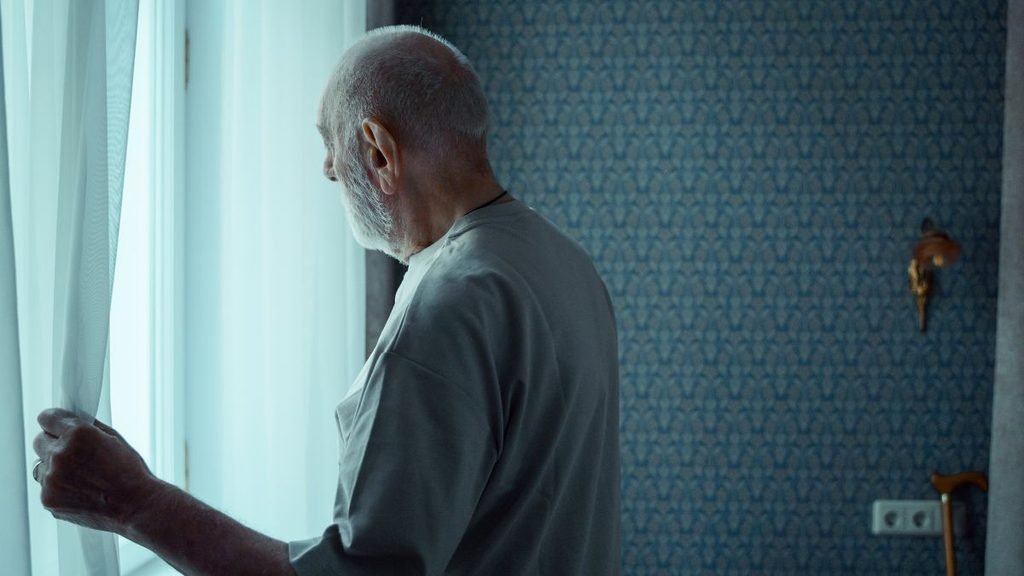
Money was only part of the change. Peter also began feeling that the quiet home he had rebuilt after Ella’s death had become another place where he needed to negotiate his preferred rhythm.
A home carries unusual weight after widowhood. It can contain grief, memories, routines, independence, and years of decisions about how the day should work.
That does not mean a new partner should be kept at a distance. It means increasing access to someone’s home can deserve as much thought as increasing access to someone’s calendar or finances.
Moving in together is not the only destination available to older couples. Some maintain committed relationships while keeping separate residences, commonly called living apart together, or LAT.
Research involving older adults has examined LAT as a distinct later-life partnership, and U.S. research has found that many older people in these relationships do not expect eventually to marry or cohabit. Separate homes can allow a couple to share affection and companionship while protecting familiar routines and household independence.
That arrangement will not suit everyone. It simply demonstrates that a relationship does not have to follow the same housing pattern someone chose at 25 or 35.
Peter’s Regret Was Not Really About Sylvia

It would be easy to turn Sylvia into the villain of the story. That would also miss its most useful lesson.
Sylvia wanted communication, activity, travel, dinners, and shared experiences. Another person might consider that an ideal relationship.
Peter wanted affection without surrendering long quiet periods, control over his schedule, predictable spending, and a home that remained primarily his private space. Neither wish was inherently unreasonable.
The mistake was allowing the relationship to develop faster than the conversation about those differences.
Peter kept compromising because he thought compromise was what successful relationships required. Eventually he noticed that most of the compromises were moving in the same direction.
That distinction matters. Compromise means two people adjust; self-erasure occurs when one person’s preferences repeatedly become the default.
Being Alone Still Does Not Mean Isolation Should Be Ignored

Peter’s experience should not be interpreted as evidence that social connection is unnecessary. The National Institute on Aging reports that persistent loneliness and social isolation are associated with serious physical and mental health risks.
But romantic partnership is only one form of connection. Friends, siblings, adult children, neighbors, clubs, faith communities, volunteer work, libraries, hobby groups, recreation programs, and regular community activities can also create meaningful social contact.
That gives an older adult more choices than “find a partner or be lonely.”
Peter had woodworking, family contact, neighbors, reading, household projects, and routines that gave shape to his days. Someone else living alone might discover that weeks are passing with very little meaningful contact and decide they want more friendship, community involvement, or dating.
The issue is not the address on the mailbox. It is whether the person has enough meaningful connection for the life they want.
Romance Should Not Automatically Mean Financial Access
Peter’s problem was ordinary lifestyle spending, not financial exploitation. Still, anyone dating later in life should know where normal generosity ends and genuine financial danger begins.
The CFPB advises consumers to be cautious about giving other people control over accounts or property.
Warning signs of exploitation can include unexplained withdrawals, sudden spending changes, adding unfamiliar people to accounts, unusual gifts, beneficiary changes, or someone becoming unusually controlling around financial decisions.
Online relationships require another layer of care. The FTC reported that nearly 60% of people who reported losing money to a romance scam in 2025 and identified how contact began said it started on social media.
A legitimate partner can discuss money without needing access to it. Requests for wire transfers, cryptocurrency, account access, loans, investments, emergency payments, or ownership changes deserve independent verification rather than emotional pressure.
Four Myths Can Push People Into the Wrong Relationship
Peter had accepted several assumptions before discovering that none of them fit him particularly well. Replacing those assumptions with better questions makes dating after 70 much easier to judge.
| Common Belief | Reality | Better Way to Think About It |
|---|---|---|
| Living alone means someone is lonely | Living arrangement and loneliness are different | Judge the quality of someone’s connections, not household size |
| A serious couple should eventually live together | Some couples deliberately keep separate homes | Choose the amount of togetherness that fits both people |
| Compromise proves commitment | Repeated one-sided compromise can create resentment | Watch whether both people can keep important preferences |
| Dating expenses are simply part of having fun | Small recurring costs can become meaningful annual spending | Set a comfortable entertainment or dating budget |
| A new relationship should fill empty space | A good relationship should add to a functioning life | Protect hobbies, friendships, routines, and independent interests |
The most important shift is subtle. A person does not need to prove that being single is superior to being partnered, or the reverse.
The decision only needs to fit the person making it.
Ending the Relationship Brought Peter an Unexpected Feeling

Eventually Peter looked at what had changed. He was spending more than he wanted, sleeping less peacefully, checking his phone more often, giving up quiet afternoons, and saying yes to plans mainly because saying no created tension.
He ended the relationship.
When his house became quiet again, Peter expected the old grief-filled silence he remembered after Ella’s death. Instead, he felt relief.
That difference clarified the entire experience for him. The silence after losing his wife had represented absence, while the silence after ending an incompatible relationship represented regained control.
Peter decided not to date again. That decision does not need to become a rule for anyone else.
Another 78-year-old could begin dating tomorrow and build an affectionate relationship that improves life enormously. Peter simply learned that companionship was not worth purchasing with the exact parts of life he valued most.
A Better Test Before Dating Changes Daily Life
People beginning a relationship after years of independence do not need to decide immediately whether someone could become a permanent partner. A much easier first question is whether life still feels recognizably their own after several months.
The following check can reveal problems before routines, households, or finances become deeply intertwined.
| Priority | What to Check | Practical Next Step |
|---|---|---|
| Time | Are hobbies, friendships, and private routines disappearing? | Protect specific days or hours for independent activities |
| Energy | Does the shared schedule leave one person repeatedly exhausted? | Agree on a comfortable number of outings |
| Money | Is dating spending exceeding the amount that feels comfortable? | Set a monthly entertainment or dating limit |
| Home | Is increasing togetherness creating tension about personal space? | Discuss overnight visits or separate residences before changing housing |
| Communication | Can both people say no without guilt or retaliation? | Talk openly about texting, calls, plans, and alone time |
| Financial safety | Is anyone requesting account access, money, investments, or ownership changes? | Keep major financial decisions independent and verify concerns separately |
No single answer automatically means a relationship should end. Patterns are more important than occasional disagreements.
If someone feels more connected while remaining financially secure, rested, respected, and free to maintain existing relationships and interests, the relationship may be adding exactly what was hoped for. If connection repeatedly requires surrendering those things, the couple has important questions to answer.