


At 94, Opel June has learned that some of the habits people defend for decades are the very ones that quietly drain their time, energy, sleep, relationships, and independence.
The danger is not always something dramatic. Often, it is a routine that feels normal simply because it has been repeated for years.
Her advice is surprisingly simple: stop carrying what no longer serves you. From sitting too long and postponing joy to unnecessary arguments and refusing useful help, these 11 habits are worth questioning before they begin taking more from life than they give back.
Here are 11 things worth reconsidering before they steal comfort, independence, time, or peace. None can guarantee a longer life.
Before getting to Opel’s list, a few current numbers put the advice in perspective. They show why seemingly small habits can matter without suggesting that every older adult should follow exactly the same routine.
| Senior Living Metric | Current Guidance or Figure | Why It Matters |
|---|---|---|
| Physical activity after 65 | At least 150 minutes of moderate activity weekly, plus strength work at least 2 days and balance activity | Supports physical function and independence |
| Falls | More than 1 in 4 adults 65+ report falling each year | Home setup and balance deserve attention |
| Eating before sleep | NIA suggests avoiding large meals within 2 to 3 hours of bedtime | A practical rule is better than a rigid 6 p.m. cutoff |
| Social isolation | About 1 in 4 adults 65+ are socially isolated | Living alone and isolation are not the same |
| Medicare Wellness visit | Part B covers one every 12 months for eligible beneficiaries | Prevention should not wait for symptoms |
1. Stop Eating Heavy Meals Too Close to Bed

Opel’s rule was simple: finish eating around 6 or 7 p.m. and have only water or tea afterward. That routine may work well for her, but there is no sound basis for telling every older adult that food after a certain clock time is harmful.
The National Institute on Aging gives a more useful rule. It recommends avoiding large meals within roughly two to three hours of bedtime, along with limiting large amounts of liquid late in the day if nighttime bathroom trips disrupt sleep.
That distinction matters. Someone going to bed at 9 p.m. has a different schedule from someone awake until midnight, while people managing diabetes, poor appetite, unintended weight loss, reflux, or certain medications may have different nutrition needs.
So the habit worth stopping is not simply “eating after sunset.” It is automatic evening eating that leaves someone overly full, uncomfortable, or awake when they would rather be sleeping.
2. Stop Treating Every Disagreement Like It Must Be Won

Opel describes reaching a point where correcting every person no longer seemed worth the emotional cost. The science cannot support the transcript’s claim that every avoided argument literally adds years to life, but chronic stress is a genuine health issue.
The American Heart Association explains that stressful situations can temporarily raise heart rate and blood pressure. Chronic stress can also disturb sleep and contribute to behaviors such as physical inactivity, overeating, smoking, or drinking too much alcohol.
That does not mean disagreement is unhealthy. Important issues sometimes need to be discussed, boundaries sometimes need to be defended, and silence is not automatically wisdom.
The better question is whether an argument can actually produce something useful. If the same disagreement repeatedly ends in anger with no decision, compromise, or change, stepping away may protect time and relationships without requiring anyone to surrender an important belief.
3. Stop Sitting for Hours Without Breaking It Up

This may be the strongest health lesson in Opel’s story. She describes ordinary movement such as walking to the mailbox, gardening, standing during phone calls, and doing household tasks rather than relying on a formal gym routine.
CDC guidance for adults 65 and older recommends at least 150 minutes of moderate-intensity aerobic activity each week, or an equivalent amount of vigorous activity, plus muscle-strengthening activity on at least two days and activities that improve balance.
People who cannot meet those targets can still benefit from being as active as their abilities and conditions allow.
The important word is activity, not gym. Walking, gardening, some forms of dancing, resistance exercises, water exercise, and many everyday activities can contribute to movement goals.
A person who takes one daily walk can still spend most of the remaining day sitting, so breaking up long inactive stretches is a useful second goal. Even standing to fold laundry or walking around the house during a phone call changes the pattern.
The first three lessons show why Opel’s ideas need translating rather than copying literally. Her personal rules can be useful prompts, but current guidance gives readers more room to adjust them safely.
| Opel’s Rule | What the Evidence Supports | More Practical Version |
|---|---|---|
| Never eat after 6 or 7 | Large meals close to bedtime may interfere with sleep | Watch meal size and timing relative to your own bedtime |
| Stop arguing | Chronic stress can affect sleep, blood pressure, and health behaviors | Choose disagreements that have a useful purpose |
| Never sit too much | Regular aerobic, strength, and balance activity supports healthy aging | Add movement throughout the day and work toward CDC targets |
| Forgive everything | Forgiveness may help some people with stress and anger | Release rumination without excusing harmful behavior |
This approach removes the false promise that one unusual routine explains why someone reached 94. It also makes the advice more usable for someone with arthritis, caregiving duties, a different sleep schedule, or limited mobility.
4. Stop Letting a Grudge Take Up Daily Space

Opel’s description of carrying anger toward her sister for years is emotionally powerful. The transcript goes too far, however, when it describes unforgiveness as poison or “slow death.”
Research does suggest a relationship between forgiveness and well-being, particularly psychological health.
A review focused on older adults found forgiveness interventions were associated with improvements in measures such as stress, anger, depression, and well-being, but the researchers also warned that the number and quality of studies were limited.
A larger meta-analysis found forgiveness was associated with health outcomes, with stronger links for psychological health than physical health. Association still does not prove that forgiving someone prevents disease or extends life.
There is another distinction worth protecting. Forgiveness does not require returning to an unsafe relationship, trusting someone again, dropping reasonable boundaries, or pretending that serious harm never occurred.
Sometimes the healthier goal is simply to stop giving the event hours of mental attention every week. For difficult trauma, abuse, depression, or persistent distress, professional support may be more appropriate than forcing forgiveness.
5. Stop Carrying the Most Upsetting News Into Bed
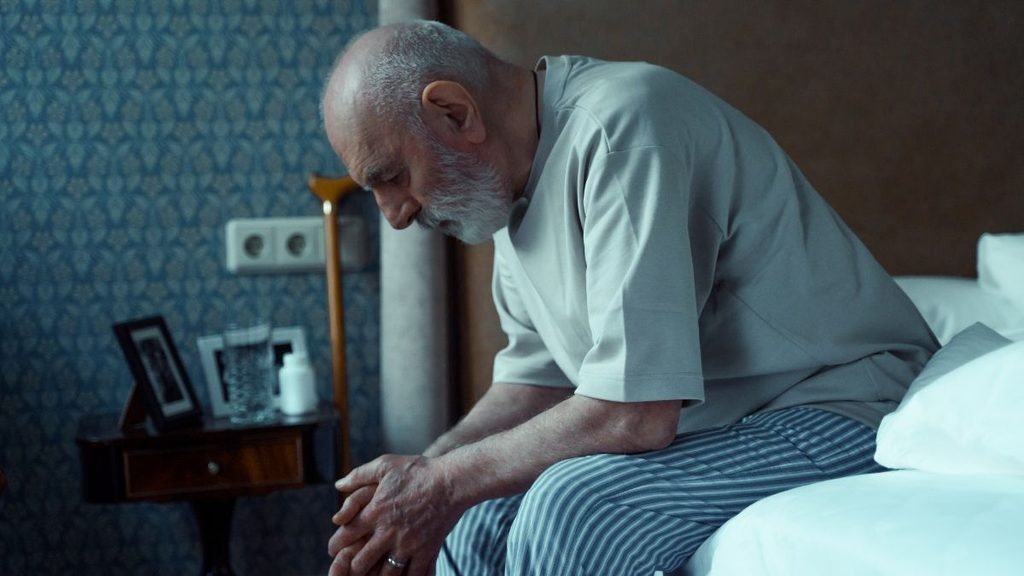
Opel stopped watching the news before bedtime because she found herself lying awake thinking about violence, disasters, and political conflict. Her personal solution was to turn off the television early and replace it with reading, prayer, or quiet time.
There is no credible medical rule saying television news must end at 5 p.m. The broader sleep advice is much easier to defend: NIA recommends creating a relaxing bedtime routine and avoiding television, computers, phones, and tablets in the bedroom.
The issue may be less about news itself and more about what happens afterward. If a program reliably leaves someone agitated, scrolling for another hour, arguing online, or replaying upsetting stories in bed, it is a poor choice for the final part of the evening.
A practical experiment is to move news earlier for one week. Replace the last 30 to 60 minutes before bed with something quieter and see whether falling asleep becomes easier.
6. Stop Saying Yes Automatically

Opel’s description of being the person who volunteered, lent money, listened for hours, and responded whenever somebody needed something will feel familiar to many readers.
Helping other people can provide connection and purpose, but help stops being generous when every yes produces resentment or exhaustion.
The useful change is not becoming unavailable. It is putting a pause between the request and the answer, especially for commitments involving money, transportation, caregiving, or several hours of time.
A response such as “I need to check my schedule first” creates room for an actual decision. Someone can remain generous while deciding which responsibilities fit their energy, budget, mobility, and other commitments.
This becomes especially important when one person is carrying substantial caregiving responsibilities. Protecting time for meals, sleep, appointments, movement, friendships, and rest is not selfish simply because another person would prefer an immediate yes.
Several habits in this article become easier to spot once they are translated into daily warning signs. The point is not to diagnose a problem but to notice patterns before they begin controlling the week.
| What You Notice | Why It May Matter | What to Consider |
|---|---|---|
| Every request receives an immediate yes | Time and energy disappear before priorities are considered | Delay the answer until you check your calendar |
| Most evenings end with upsetting television or scrolling | The routine may make it harder to wind down | Create a quieter final 30 to 60 minutes |
| Several days pass without meaningful contact | Social routines may be shrinking | Schedule a call, meal, class, club, or visit |
| Household tasks feel increasingly exhausting | The home may be demanding more than it used to | Get help with selected tasks rather than everything |
| Rugs, cords, or dark stairs have become normal scenery | Familiar hazards are easy to stop noticing | Do a room-by-room safety check |
None of these signs means someone has “become old.” They simply indicate that a routine may deserve another look because circumstances, priorities, or physical abilities have changed.
7. Stop Waiting for the Perfect Time to Enjoy Life

This is the least medical lesson and perhaps the most recognizable. Opel’s source story describes trips and experiences postponed until retirement or some later moment that never arrived.
That does not mean retirees should abandon emergency savings or spend recklessly because tomorrow is uncertain. Financial flexibility matters, and large travel or housing decisions still deserve thought.
The better target is indefinite postponement. A Sunday lunch with a friend, wearing the dress kept for special occasions, visiting a nearby park, starting a hobby, or taking a manageable trip does not require a perfect future.
Some plans genuinely need to wait because of money, health, work, or caregiving. Others remain delayed because “later” has become the automatic answer, and that is the habit worth questioning.
8. Stop Letting Your Social World Shrink Without Noticing

A quieter life is not automatically a lonely one. Someone may live alone, enjoy substantial solitude, and still have strong relationships, while another person can live with relatives and feel deeply lonely.
NIA makes exactly this distinction. Loneliness is the distressing feeling of being alone or disconnected, while social isolation refers to having relatively few regular social contacts; the agency’s outreach material notes that roughly one in four adults 65 and older are socially isolated.
That matters because the solution is not simply “be around more people.” Meaningful connection could mean a weekly breakfast, religious community, library group, volunteer role, neighbors, hobby club, phone calls, or regular video conversations.
CDC also links social connection with better health and well-being, including better stress management and quality of sleep. These are associations across populations, not a guarantee that adding one weekly activity changes an individual’s health outcome.
9. Stop Confusing Independence With Refusing Help
There is a strange trap in aging conversations: accepting help is sometimes described as the opposite of independence. In practice, the right amount of help can be what preserves independence.
Someone who hires lawn care may have more energy for walking. A person who stops climbing a ladder to clean gutters may remain perfectly capable of managing the rest of the home, while grocery delivery or occasional housekeeping may make staying home easier.
Area Agencies on Aging exist in communities across the United States to connect older adults with local supports. Depending on the area, that network may include home-delivered meals, homemaker services, transportation, caregiver support, and other resources intended to help people continue living in the setting they prefer.
Availability, eligibility, and cost differ by community. The Eldercare Locator can connect U.S. residents with their local aging network at 800-677-1116.
The warning sign is not asking for help. It is continuing a task solely to prove you can still do it when paying, trading, or asking someone else to handle that particular job would leave more control over everything else.
10. Stop Ignoring Small Fall Hazards
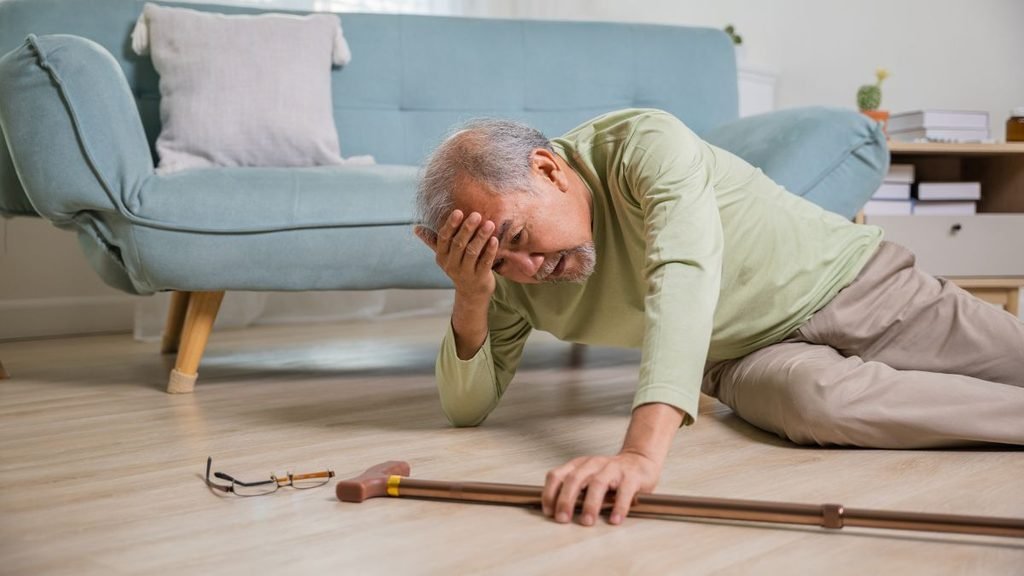
A curled rug edge seems insignificant until a foot catches it. A dim stairway seems normal when someone has walked it for 20 years, yet familiarity does not make the hazard disappear.
CDC reports that more than one in four older adults report a fall each year. NIA recommends measures such as better lighting, secure carpeting, clear walkways, grab bars where appropriate, strength and balance activity, medication review when side effects cause dizziness, and regular vision and hearing checks.
That does not mean a home needs to look like a medical facility. Night lights can be discreet, grab bars now come in residential finishes, and moving one low table may do more for a walkway than an expensive renovation.
Start with routes used at night: bedroom to bathroom, stairs, the path from the driveway, and anywhere a pet, cord, rug, or piece of furniture narrows the walking space. NIA’s room-by-room recommendations also suggest keeping frequently used objects within easy reach rather than climbing on chairs or stretching awkwardly.
Four common beliefs can make these changes harder than they need to be. Separating the myth from the practical reality protects both independence and personal choice.
| Common Belief | Reality | Better Way to Think About It |
|---|---|---|
| Living alone means someone is lonely | Living arrangement and loneliness are different | Judge the quality and frequency of connection |
| Accepting help means losing independence | Selected help may make staying home easier | Outsource the task, not control of your life |
| Fall prevention makes a home look institutional | Many changes are ordinary lighting, flooring, storage, and hardware choices | Improve function without giving up personal style |
| A Medicare Wellness visit is an annual physical | It is a prevention-focused visit, not a routine full physical exam | Use it to update risks and a prevention plan |
These distinctions are important because age alone should not determine how someone lives. A healthy 82-year-old in a walkable neighborhood may need less daily help than a younger person managing several health or mobility problems.
11. Stop Skipping Preventive Care Because You Feel Fine

Feeling well is valuable, but prevention exists precisely because some risks appear before obvious symptoms do. Opel’s broader message about not waiting applies here more defensibly than it does to promises about longevity.
Medicare Part B covers a yearly Wellness visit for eligible beneficiaries once every 12 months. The visit is designed to create or update a personalized prevention plan based on health and risk factors, and Medicare clearly notes that it is not the same as a routine physical examination.
Medicare also covers a range of preventive and screening services, with coverage rules varying by service and personal eligibility. Many preventive services have no out-of-pocket cost when requirements are met and the provider accepts assignment, although additional tests or services can create costs.
The practical move is not to demand every possible test. It is to ask which screenings, vaccinations, medication reviews, vision or hearing checks, and other preventive services make sense for your own medical history and circumstances.
A Seven-Day “Stop Doing” Reset
Eleven changes can feel like eleven more tasks. A better approach is to test one small habit each day and keep only the changes that genuinely make life easier.
| Day | What to Check | Small Next Step |
|---|---|---|
| Monday | Sitting time | Add two or three short movement breaks |
| Tuesday | Evening routine | Move the heaviest meal earlier if bedtime discomfort is common |
| Wednesday | Stress | Step away from one argument that has no useful outcome |
| Thursday | Social connection | Contact someone you genuinely enjoy |
| Friday | Home safety | Walk the bedroom-to-bathroom route after dark |
| Saturday | Help | Identify one tiring household task someone else could handle |
| Sunday | Prevention | Check when your next health or Wellness visit is due |
This is intentionally small. The point is to discover which routines are quietly taking more from the week than they give back, then change those first.
What These 11 Things Really Have in Common
Opel June’s story is memorable because she focuses on subtraction rather than adding another complicated routine. Yet the evidence-backed lesson is not that skipping evening snacks, forgiving everyone, or avoiding arguments creates a formula for reaching 94.
The stronger idea is that some habits deserve regular re-evaluation. A routine that once fit your work schedule, family responsibilities, home, body, or budget may no longer fit the life you have now.
Look especially closely at habits that take away movement, sleep, connection, useful help, home safety, preventive care, or time you actually enjoy. Those are areas where current public-health guidance gives readers something more dependable than one person’s longevity story.
The goal is not to make life smaller as the years pass. It is to stop spending energy on routines that make independence, comfort, and meaningful time harder to protect.